What is the Meaning of seeing owls at night?
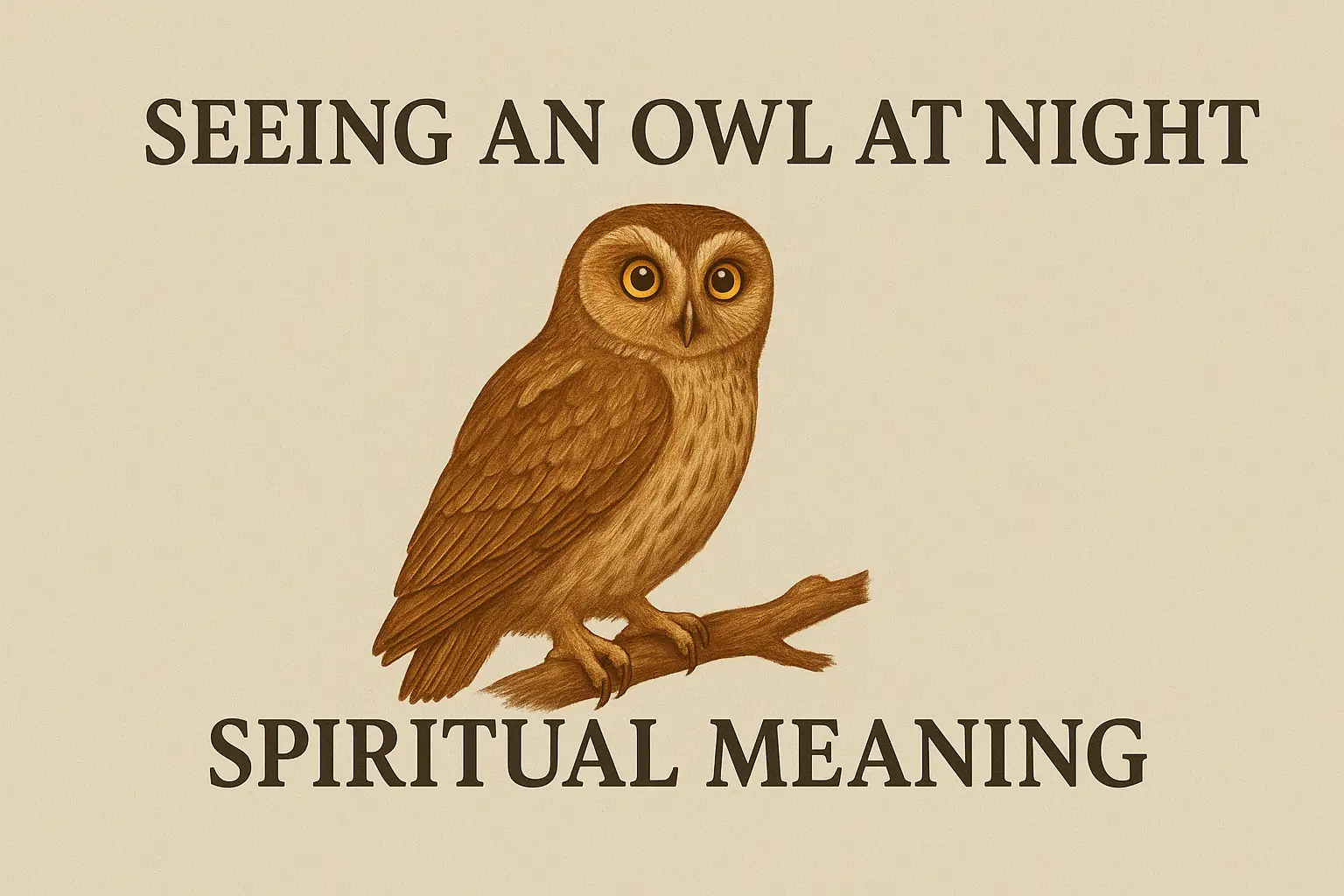
Seeing an owl at night means you are witnessing a perfectly natural nocturnal hunter at work. But across thousands of years and dozens of cultures, this sighting carries far deeper weight. It is widely interpreted as a sign of wisdom, change, hidden truth, or spiritual guidance — and in some traditions, a warning.
Why Owls Appear at Night?
Owls are nocturnal predators built for the dark. Their asymmetrical ears triangulate sound with exceptional precision, and their facial discs act like satellite dishes, funneling even the faintest noise to their hearing. This biological mastery of darkness is exactly why so many cultures saw them as bridges between the seen and unseen worlds.
Their silent flight adds to the mystery. Unlike other birds, owls have soft, comb-like feather edges that absorb sound. They appear and disappear without warning, which made ancient peoples believe they carried messages from realms beyond.
Owls are most commonly spotted at dusk, dawn, and throughout the night. A sighting is not unusual — it simply means there is a healthy ecosystem nearby with adequate prey such as mice, voles, and small birds.
What It Means to See an Owl at Night?
The meaning depends heavily on your cultural background and personal belief system. However, some themes show up across nearly every tradition worldwide.
The most commonly shared meanings include:
- A call to trust your intuition
- A signal that change or transformation is near
- A message from a deceased loved one or the spirit realm
- A reminder to look deeper beneath the surface of a situation
- A warning to pay attention to something being ignored
Most spiritual traditions agree on one thing: an owl sighting is not random. It is a moment worth pausing over.
Cultural Meanings of Seeing Owls at Night
Ancient Greece
In ancient Greece, the owl was the sacred companion of Athena, the goddess of wisdom. It became a symbol of knowledge, foresight, and intellectual clarity. The owl’s image appeared on Athenian coins, cementing its role as a civic and spiritual symbol of enlightened thinking.
Seeing an owl in ancient Greek culture was considered deeply positive. It meant that wisdom and clarity were available to you.
Ancient Rome
The Romans took a darker view. They believed owls foretold death and disaster. It was said that the hooting of owls announced the deaths of Julius Caesar and several other Roman emperors. The screeching of owls before a battle was seen as a terrible omen.
This negative Roman interpretation spread through much of medieval Europe. It gave rise to superstitions still found today in parts of France, Germany, and the British Isles.
Native American Traditions
Native American beliefs about owls vary widely by tribe. The Lakota, Ojibwe, and Hopi people regard owls as protectors, messengers, and guides through life transitions. Some nations also call the owl the “night eagle” because of its sharp vision and its role as a truth-teller.
For the Apache people, dreaming of an owl was considered a sign of death. The Aztecs and Mayans linked owls to the gods of death as their messengers and companions. The Catawba people, however, considered the cry of a Great Horned Owl a good omen.
The key takeaway: Native traditions are not uniform. Always consider the specific nation’s perspective before drawing conclusions.
Celtic Traditions
In Celtic mythology, the owl was a creature of the Otherworld. It was believed to carry souls of the dead into the afterlife and guard the entrances to other realms. The Welsh figure Blodeuedd was transformed into an owl as punishment, making her a symbol of transformation through consequence.
Celtic people saw the owl as wise but also as a liminal creature — one that lived between worlds. Encountering one meant you were standing at a threshold in your own life.
Hinduism
In Hindu mythology, the owl is the vahana — meaning the divine vehicle or mount — of Lakshmi, the goddess of wealth, fortune, and prosperity. This gives the owl a uniquely positive meaning in this tradition.
The owl’s ability to see clearly in darkness represents the wisdom needed to build true prosperity. Wealth without clear vision leads to suffering. The owl reminds devotees to seek inner discernment, not just material gain.
Japanese Culture
The Japanese word for owl, “fukuro,” can be written with characters meaning “no hardship” or “no suffering.” Owl figurines are popular good-luck charms in Japan, placed in homes and businesses to attract protection and good fortune.
This makes Japan one of the clearest examples of the owl as a positive symbol. The Japanese Ainu people also revered the Eagle Owl as a messenger of the gods and would toast to it before a hunting expedition.
Chinese Tradition
In ancient China, owls were associated with the drum and with lightning. Placing owl effigies in the corners of a home was believed to protect it from lightning strikes. Dating back at least 6,000 years to the Yangshao culture, owls were totem animals believed to communicate between the earthly and spiritual realms.
Chinese tradition also viewed the owl as a symbol of “too much Yang” — excessive active, masculine energy — sometimes used as a caution to restore balance.
African Traditional Beliefs
Across most of sub-Saharan Africa, the owl carries a deeply ominous meaning. In many African countries, owls are associated with sorcery, witchcraft, and baneful magic. A large owl near a home is believed to indicate that a powerful shaman lives there or that dark forces are at work.
Among the Luhya, Luo, and Kalenjin peoples of Kenya, owl sightings are considered bad omens. In parts of South Africa, an owl sitting on a roof is believed to signal that something terrible will befall the family within. These are living beliefs, not historical curiosities, and they deserve respectful acknowledgment.
Christianity
The Bible references owls in the context of desolation and loneliness. In Leviticus, the owl is listed among unclean birds. The image of an owl in a ruined, deserted place became a literary device to signal spiritual emptiness or judgment.
In Christian apologetic symbolism, however, owls were sometimes used to represent the light of Christ illuminating the darkness of ignorance. The meaning is not entirely negative — it reflects the tension between darkness and spiritual enlightenment.
Islam
Islam does not assign owls a specific sacred or forbidden spiritual meaning in the Quran. However, in Islamic dream interpretation traditions, an owl in a dream can represent a tyrant, a dangerous thief, or a person without moral steadiness. Islam generally cautions against building belief systems around omens or superstitions, categorizing such interpretations as incompatible with Tawhid (the oneness of God).
In cultural practice across some Muslim-majority regions such as Iran, the owl is colloquially considered a bird of bad luck, though this stems from local folklore rather than religious text.
Hoodoo, Wicca, and Folk Magic Traditions
Hoodoo
In Hoodoo — African American folk magic — the owl is a powerful symbol for revealing hidden truth. Owl feathers are used in uncrossing rituals designed to expose hidden enemies or deceptive people. The owl’s association with darkness and sight makes it an ideal ally for work that involves exposing what is concealed.
In Palo Mayombe, a Congo-diaspora religion, the owl is considered a messenger of the dead and is treated with considerable spiritual gravity.
Wicca
In Wicca and other pagan traditions, owls are revered as symbols of magic and lunar mystery. Their nocturnal nature aligns them with the moon, intuition, and feminine energy. Wiccans often invoke owl energy in rituals designed to enhance psychic ability, gain clarity, or communicate with spiritual guides.
The owl in Wicca is seen as a guardian of deeper mysteries — a guide for those willing to look beyond the obvious.
What Different Owl Colors Mean at Night
The color of the owl you see can add another layer of meaning in many spiritual traditions.
| Owl Color | Common Symbolic Meaning |
|---|---|
| White Owl | Purity, spiritual protection, divine message |
| Black Owl | Shadow work, hidden truth, deep transformation |
| Brown Owl | Grounding, practical wisdom, stability |
| Grey Owl | Neutrality, objectivity, balance |
| Barn Owl (white face) | Ancestral message, soul transition |
These color meanings are not universally fixed. They vary by tradition and personal intuition.
Owl Behavior at Night and What It Signifies
Not all owl sightings are the same. The behavior of the owl can shape the interpretation significantly.
Owl hooting near your home: In many folk traditions, this signals a message you need to hear. In others, it is a territorial call or communication between mates — entirely natural. Southern Indian tradition interpreted the number of hoots: one hoot meant impending death, two meant coming success, nine meant good fortune.
Owl flying directly over you: Often interpreted as a sign that spiritual forces are actively watching over your path. It can also signal that a significant transition is imminent.
Owl staring at you: Many traditions see this as a direct message. The owl’s fixed gaze is seen as an invitation to look inward — to examine what you have been avoiding.
Owl landing near you: Considered highly significant in most traditions. It is rare in nature and is often interpreted as an urgent spiritual signal to pause and reflect.
Two owls together: Seen in some traditions as a sign of spiritual partnership or that you are surrounded by strong spiritual energies moving you toward a major change.
The Science Behind Owl Night Sightings
It is important to stay grounded in science alongside symbolism. Owls are active at night because that is when their prey is active. Their anatomy — large eyes fixed forward, facial discs that amplify sound, silent wings — makes them perfectly evolved for nocturnal hunting.
A sighting at night most often simply means there is a healthy local ecosystem with adequate prey and suitable habitat. Urban owl sightings are increasing as great horned owls and barn owls adapt to city parks and suburban green spaces.
If you see an owl on the ground during daylight hours, it may be injured or a young fledgling still learning to fly. In that case, contact a local wildlife rehabilitator rather than interpreting it spiritually.
What To Do When You See an Owl at Night?
Most people feel unsure what to do after a night owl encounter. Here is a practical and spiritually grounded approach regardless of your belief system.
Step 1: Pause and observe.
Do not rush away or try to chase or touch the owl. Simply be present. Note what you were thinking about before the sighting — many spiritual traditions say the encounter reflects your current state of mind.
Step 2: Note the details.
Record the time, the owl’s behavior, whether it hooted, and how it made you feel. This is useful both for wildlife identification and for reflecting on any symbolic meaning later.
Step 3: Reflect inward.
Ask yourself: Is there a decision I have been avoiding? A truth I have been refusing to face? A change that is overdue? The owl is almost universally a symbol of “seeing clearly.” Use that prompt honestly.
Step 4: Protect your small animals.
If you keep chickens, rabbits, or small outdoor pets, an active owl near your home is a practical signal to secure them in covered enclosures at night. This is wildlife stewardship, not superstition.
Step 5: Respect the bird.
Owls are protected in most countries under wildlife laws such as the Migratory Bird Treaty Act in the United States. Never attempt to handle, capture, or disturb an owl. Do not collect feathers — this is illegal in many jurisdictions.
Step 6: Choose your meaning intentionally.
If you are spiritual, let your tradition guide your interpretation. If you are not, simply allow the experience to invite a moment of reflection. Either approach is valid.
Key Takeaways
- Seeing an owl at night is biologically normal — owls are nocturnal hunters.
- Spiritually, owl sightings are interpreted across every major culture worldwide.
- Positive meanings include wisdom, guidance, prosperity, transition, and protection.
- Negative meanings include warnings, death omens, and sorcery, particularly in African, Roman, and some Islamic folk traditions.
- Greek, Hindu, Japanese, and Wiccan traditions are among the most owl-positive.
- The behavior of the owl (hooting, staring, flying over, landing near) adds meaning.
- What matters most is your own cultural context and intuitive response.
- Always respect the owl as a protected wild animal, regardless of belief.
Frequently Asked Questions
Is seeing an owl at night good luck or bad luck?
It depends entirely on the tradition you follow. In Greek, Hindu, Japanese, and many Native American traditions, it is positive. In Roman, African, and some European folk beliefs, it can be a warning. Most modern spiritual interpreters lean toward seeing it as a positive message of wisdom and guidance.
What does it mean if an owl hoots outside your window at night?
In many folk traditions, this is considered a direct message meant for you. Southern Indian number-based interpretations assigned specific meanings to the number of hoots. In most modern spiritual frameworks, it is seen as a call to listen more carefully to your own intuition and to be honest about something you may be avoiding.
What does it mean if an owl visits your house at night?
An owl near or on your home is widely seen as a sign of protection and transformation. It can also signal an upcoming change in your household. In African traditional beliefs, however, it can be viewed as an omen of misfortune or the presence of dark spiritual forces.
Does seeing an owl at night mean someone will die?
This belief exists in several traditions including some Native American nations, parts of Africa, and ancient Rome. However, many modern spiritual teachers interpret this symbolism not as literal death but as the end of a phase or chapter in life, followed by transformation and new beginnings.
What does it mean when an owl looks directly at you?
The owl’s direct gaze is widely interpreted as a message requiring your attention. Because owls cannot move their eyes in their sockets and must turn their whole head to see, their stare carries unusual weight. Spiritually, it is seen as a call to face something you have been looking away from.
What does it mean to hear an owl but not see it?
Hearing without seeing adds a layer of mystery. In most traditions, the hoot itself carries the message regardless of visibility. It is often interpreted as a message from the spirit realm, a call to tune into your inner voice, or a warning to be alert to your surroundings.
What does a white owl mean at night?
A white owl is generally considered a very powerful spiritual sign. It is associated with purity, divine messages, ancestral contact, and spiritual protection. In many traditions, a white owl sighting at night is considered among the rarest and most significant encounters with this bird.
What does it mean if an owl follows you at night?
An owl appearing to follow or track you is considered extremely significant in most spiritual traditions. It is typically interpreted as a persistent message that you have not yet received or acted upon. It may also indicate that you have a strong connection to owl energy as a spirit animal or totem.
Can an owl be a sign from a deceased loved one?
Many people across spiritual traditions, especially those in mediumship, shamanism, and Wicca, believe that animals can carry messages from those who have passed. The owl, as a boundary creature between the living and the spirit world, is particularly associated with this kind of contact. There is no scientific evidence for this, but it is a deeply held comfort for many.
What does it mean scientifically when you see an owl at night?
Scientifically, it means you are near healthy habitat. Owls require mature trees for roosting, open areas for hunting, and an abundant prey base. Seeing one at night confirms that your local ecosystem supports these conditions. It is also a reminder that rodenticide use in the area poses a risk to owls through secondary poisoning.
What should you NOT do when you see an owl at night?
Do not shine a bright flashlight or phone light directly at the owl, as this disrupts its hunting and can harm its night-adapted vision. Do not chase, approach, or attempt to touch it. Do not collect feathers from the ground, as this is illegal in many countries. Do not feed it, as this disrupts its natural hunting behavior.
Is the owl a spirit animal, and how do I know if it is mine?
In shamanic and indigenous traditions, a spirit animal is not chosen — it chooses you. Signs that the owl may be your spirit animal include repeated owl encounters in nature and dreams, feeling a deep personal resonance with owl symbolism, and naturally thriving during nighttime hours with strong intuitive awareness. If you resonate with seeing beneath deception and navigating uncertainty with calm, the owl may be your guide.