Rabbit Symbolism: What is the Spiritual Meaning of a Rabbit?
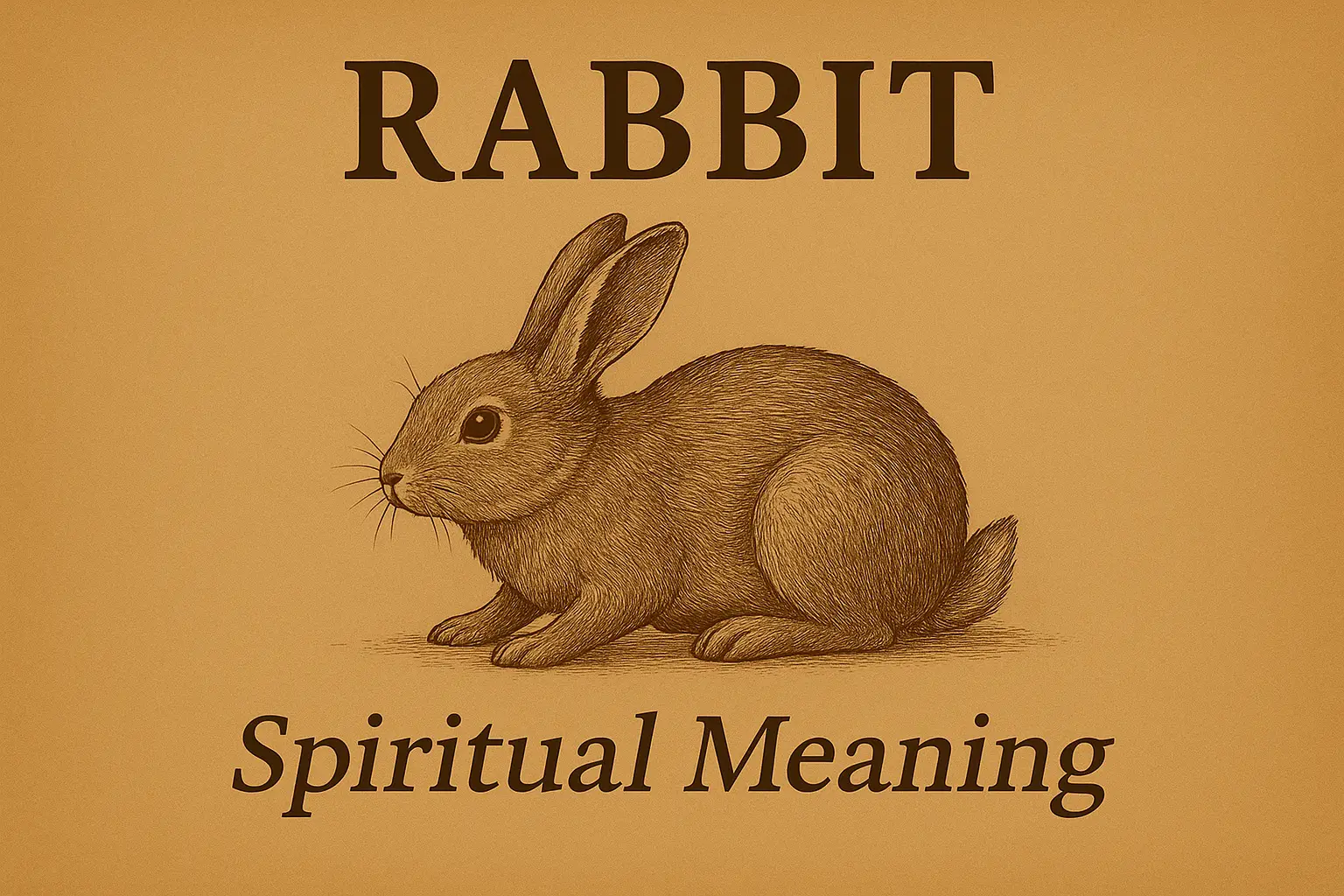
Rabbits are one of the most spiritually rich symbols in human history. Across nearly every major culture, the rabbit represents fertility, luck, transformation, and lunar energy. Whether you encounter one in a dream, see one cross your path, or feel drawn to the rabbit as a spirit animal, this creature carries a deep and layered message that goes far beyond its soft appearance.
What Does a Rabbit Symbolize Spiritually?
The rabbit is a universal symbol of new beginnings and rapid growth. Its core spiritual meanings include fertility, abundance, rebirth, quick thinking, and intuition.
Rabbits are also deeply tied to the Moon across many traditions. From Celtic folklore to African mythology, the “face in the moon” is often described as a rabbit. This lunar connection links the rabbit to cycles, mystery, and the feminine divine.
The rabbit also teaches awareness and agility. As a prey animal, it survives through alertness and speed. Spiritually, this translates into a message: trust your instincts and move when the moment is right.
Core Spiritual Themes of the Rabbit
Before diving into specific traditions, here are the recurring spiritual themes the rabbit represents:
- Fertility and abundance — linked to its prolific reproduction
- Lunar energy and intuition — connected to moon deities worldwide
- Transformation and rebirth — tied to its burrowing and emergence
- Trickster wisdom — cleverness used to outsmart stronger forces
- Fear and courage — the tension between instinct and action
- Good luck and fortune — one of the most universal rabbit symbols
Rabbit Symbolism in Ancient Cultures
Ancient Egypt
The ancient Egyptians associated the hare, which later became interchangeable with the rabbit, with generative and creative power. A hare hieroglyph (𓃹) existed in their writing system, suggesting the animal held symbolic weight in everyday spiritual life.
Egyptians linked the rabbit to the Moon and believed it carried magical properties. The creature was seen as a bringer of good fortune and was respected as a symbol of life and renewal.
Ancient Greece and Rome
In the Greco-Roman world, the hare was a symbol of love, fertility, and lust. It was the favored offering to Aphrodite and Eros, the gods of love and desire.
Roman writings also noted the rabbit’s association with beauty. Consuming the rabbit’s flesh was believed to temporarily enhance attractiveness in the person who ate it, according to classical-era beliefs.
Ancient China and the Moon Rabbit
In Chinese mythology, the Jade Rabbit lives on the Moon beside the immortal Moon Goddess Chang’e. According to legend, the Jade Emperor once tested several animals by disguising himself as a starving old man. The rabbit, unable to offer anything but grass, selflessly leaped into a fire to offer its own body as food. The Emperor was so moved that he sent the rabbit to the Moon as an immortal companion.
The Jade Rabbit is also said to spend eternity grinding the elixir of immortality with a mortar and pestle. This story connects the rabbit to longevity, compassion, and spiritual selflessness.
Rabbit Symbolism Across World Traditions
Chinese Zodiac and Culture
The rabbit is the fourth animal in the Chinese zodiac, often considered the luckiest of all twelve signs. It symbolizes mercy, elegance, beauty, and peace.
People born in the Year of the Rabbit are believed to be calm, artistic, diplomatic, and deeply compassionate. The rabbit is associated with avoiding conflict and completing tasks with great care and skill.
Japanese Folklore
In Japan, the Moon Rabbit is seen pounding mochi (rice cakes) on the Moon’s surface. This image is deeply embedded in Japanese culture and is visible in the pattern of the Moon itself when observed on a clear night.
The rabbit’s lunar connection in Japan ties it directly to intuition, spiritual insight, and the quiet wisdom that comes from reflection rather than action.
Celtic and Irish Traditions
In Celtic folklore, the rabbit and hare were seen as supernatural beings from the Otherworld. They were believed to have the power to shapeshift, and harming one was considered deeply unlucky.
Irish legends describe witches transforming into hares to move about unseen at night. One famous tale tells of a farmer who wounds a suspicious hare, only to find an injured woman in its place the next day. The rabbit in Celtic tradition bridges the human world and the world of spirits.
Native American Traditions
Rabbit symbolism in Native American cultures varies by tribe but is often centered on the trickster archetype. In the southeastern tribes, the rabbit is a clever and cunning figure who outsmarts stronger opponents through wit.
The Great Lakes Algonquian hero Nanabozho, also called the Great Hare, is the son of the Sun and is revered as a teacher and friend of humanity. In Hopi and Shawnee cultures, the rabbit is a clan animal with sacred significance.
There is also a powerful spiritual story called “Rabbit and Eye Walker,” in which a witch befriends Rabbit. When Rabbit abandons her out of fear, she curses him to become a “Fear Caller,” attracting the very things he is afraid of. This story carries a vital spiritual lesson: fear, when projected outward, draws danger toward you.
African Traditions
In African folklore, the rabbit is both a trickster and a divine messenger. One myth tells of the Moon sending the rabbit to Earth to carry the gift of immortality to humankind. The rabbit, being a trickster, delivers the opposite message, bringing death instead. As punishment, the Moon strikes the rabbit and splits its lip.
Despite this cautionary tale, the rabbit in African culture is also viewed positively as a spirit of wisdom and kindness. The creature represents the ability to navigate systems and survive through intelligence rather than strength.
The character of Br’er Rabbit, rooted in African oral tradition and carried through the African-American experience, is a direct descendant of these trickster tales. Br’er Rabbit outsmarts authority figures and refuses to accept limitations placed on him by stronger forces.
Hoodoo Tradition
The famous rabbit’s foot charm originates from Hoodoo, a spiritual folk tradition blending African, Indigenous, and European practices. In Hoodoo, the left hind foot of a rabbit is carried as a protective talisman believed to attract good luck and ward off evil.
This practice spread widely and became one of the most well-known good luck symbols in Western culture. The specific conditions under which the foot is obtained vary by practitioner, but the rabbit remains central to Hoodoo folk magic as a bringer of fortune.
Wicca and Pagan Traditions
In Wiccan and Pagan spirituality, the rabbit is connected to the Moon, intuition, and transformation. It is seen as a guide that helps practitioners navigate their inner world and sharpen psychic awareness.
The rabbit is sometimes used as a familiar in magical practice, an animal spirit that supports and enhances a practitioner’s work. Its energies are called upon during spells for fertility, manifestation, and new beginnings.
The Easter Bunny itself traces back to pre-Christian Pagan spring celebrations tied to the goddess Eostre (or Ostara). Rabbits represented the fertile return of spring and the renewal of life after winter.
Christianity and Early Church Symbolism
In early Christianity, the rabbit held an ambivalent place. Saint Augustine connected the rabbit to humility and spiritual cowardice, describing it as a weak creature that retreats into high places for safety. He used this as a metaphor for seeking salvation in Christ rather than worldly things.
However, medieval Christian art also used the rabbit in positive spiritual contexts. The famous Three Hares motif, found in churches across Devon, England, and in Buddhist cave art in Dunhuang, China, depicts three rabbits in a circular formation, each sharing an ear. In Christian contexts, this symbol has been interpreted as representing the Holy Trinity. Its appearance across unconnected religious traditions makes it one of the most mysterious symbols in world art.
During the Easter season, the rabbit’s connection to resurrection and rebirth was absorbed into Christian celebration. The rabbit became a symbol of Christ’s resurrection and the renewal of life.
Buddhism
In Buddhist tradition, the rabbit is associated with selflessness and compassion. The famous Jataka tale describes a past life of the Buddha in which he took the form of a rabbit. When a beggar asked for food, the rabbit, having nothing to offer but grass, threw himself into a fire to offer his own body. The Jade Emperor (in Chinese-Buddhist blending) honored the rabbit by placing his image on the Moon.
This story is a teaching on the highest form of generosity: giving without reserve, even at personal cost.
The Rabbit as a Spirit Animal
If the rabbit appears repeatedly in your life, whether in waking encounters, dreams, or meditations, it may be acting as your spirit guide.
The rabbit spirit animal speaks to those who are navigating a period of rapid change. It carries a message to act quickly, trust your instincts, and not overthink the next step.
People who identify with the rabbit as their totem are often creative, intuitive, and resourceful. They may struggle with fear or overthinking, and the rabbit reminds them to move through uncertainty with agility rather than paralysis.
The rabbit spirit animal also holds a warning. Like the “Fear Caller” of Native American tradition, those ruled by excessive anxiety may attract exactly what they fear most. The message is to face fears rather than flee from them.
What It Means When a Rabbit Crosses Your Path?
Seeing a rabbit cross your path is generally considered a positive omen in most traditions. It often signals:
- A new opportunity or project on the horizon
- A period of fertility and abundance coming your way
- A reminder to trust your instincts in a current situation
- A call to act quickly before the moment passes
In some African traditions, however, a rabbit crossing the path is seen as a warning of bad luck. Context matters. Pay attention to your own intuition and the circumstances of the encounter.
Rabbit Color Symbolism
The color of the rabbit you encounter adds another layer of spiritual meaning:
| Color | Spiritual Meaning |
|---|---|
| White | Purity, spiritual enlightenment, new beginnings, and great choices ahead |
| Black | Anxiety, hidden fears, or unresolved shadow work |
| Brown | Groundedness, connection to the earth, and practical wisdom |
| Grey | Balance, neutrality, and the need for calm decision-making |
| Spotted | Duality, the mixing of energies, and complex situations |
A white rabbit is widely considered the most fortunate. In Europe, saying “white rabbit” or “rabbit, rabbit” on the first of each month is a folk tradition believed to bring luck throughout the month. It was first recorded in England in 1909.
Dreaming of a Rabbit: What It Means
Rabbits in dreams carry rich symbolic weight. The meaning depends on the context of the dream.
A rabbit running freely suggests an opportunity you should pursue without hesitation. It may also reflect your own desire for freedom or movement in your life.
A baby rabbit in a dream often points to a new beginning, creative project, or growing relationship that needs care and nurturing to thrive.
A dead rabbit may signal the end of a cycle, the need to release fear, or a warning to look more carefully at a situation you are moving through too quickly.
Being chased by a rabbit in a dream is unusual and often points to something in your unconscious that you have been avoiding. The rabbit here represents suppressed emotion or an unaddressed fear asking for attention.
The Three Hares: A Cross-Cultural Symbol
One of the most overlooked and fascinating aspects of rabbit symbolism is the Three Hares motif. This ancient symbol shows three rabbits chasing each other in a circle, each sharing a single ear with the next, creating a continuous loop where only three ears are visible despite each rabbit appearing to have two.
This symbol appears independently in:
- Buddhist cave paintings in Dunhuang, China, dating to the 6th century CE
- Medieval churches across Devon, England
- Jewish synagogues in Europe
- Islamic architecture in the Middle East
Scholars are still debating its exact meaning and how it appeared across such different traditions. Theories include:
- The cycle of life, death, and rebirth
- The Holy Trinity in Christian contexts
- Unity and interdependence
- Eternal renewal and the Moon’s cycles
The Three Hares symbol is a remarkable reminder that rabbit symbolism transcends any single religion or culture. It speaks to something universally human.
The Rabbit’s Foot: Origins and Meaning
The rabbit’s foot as a good luck charm is one of the most widely recognized folk symbols in the Western world. Its roots trace most directly to Hoodoo practice in the American South, where the left hind foot of a rabbit was believed to carry protective and luck-drawing power.
The choice of the left (rather than right) foot was significant. In folk magic, the left side is often associated with receiving energy, while the right is associated with giving. Carrying the left foot was seen as drawing fortune toward the holder.
Over time, this practice spread far beyond its Hoodoo roots into mainstream culture, losing much of its original spiritual context but retaining its association with luck and protection.
What To Do When the Rabbit Appears in Your Life?
If the rabbit has shown up as a meaningful symbol for you, here are practical steps to engage with its energy:
Reflect on your relationship with fear:
The rabbit’s most consistent spiritual lesson is about navigating fear, not eliminating it. Ask yourself what you have been avoiding. The rabbit energy invites you to move through it.
Embrace rapid action:
Rabbit energy does not favor long deliberation. If you have been sitting on a decision, the rabbit’s appearance may signal it is time to move. Trust your instincts.
Examine your creative and fertile energy:
Are there ideas, projects, or relationships you have been nurturing? The rabbit is a sign to pour attention into growth and let things multiply.
Spend time in nature at dawn or dusk:
Rabbits are most active at these liminal hours. Being present in nature during these times can help you tune into the subtle energy the rabbit represents.
Use lunar cycles intentionally:
Since the rabbit is deeply tied to the Moon, aligning your goals and rituals with the new and full Moon can amplify rabbit energy in your life.
Key Takeaways
- The rabbit is one of the most universally recognized spiritual symbols in the world, appearing across nearly every major culture and religious tradition.
- Its core themes are fertility, luck, transformation, lunar energy, trickster wisdom, and the navigation of fear.
- In Chinese culture, the rabbit is the luckiest zodiac animal and is tied to the Moon Goddess through the legend of the Jade Rabbit.
- In Native American tradition, the rabbit teaches spiritual lessons about fear through the trickster archetype and the “Fear Caller” story.
- Hoodoo tradition gave us the rabbit’s foot charm, one of the most widespread folk magic symbols in Western culture.
- In Wicca and Paganism, the rabbit is a guide for intuition, moon work, and transformation.
- The Three Hares motif is a mysterious cross-cultural symbol appearing independently in Buddhist, Christian, Jewish, and Islamic contexts.
- When a rabbit appears in your life, it is often a call to act quickly, trust your instincts, face your fears, and open yourself to abundance.
Frequently Asked Questions
Is seeing a rabbit good luck or bad luck?
In most world traditions, seeing a rabbit is considered good luck. It is widely associated with fortune, new beginnings, and abundance.
However, in some African mythological traditions, a rabbit crossing your path can signal a warning. The interpretation depends on cultural context and your personal intuition about the encounter.
What does it mean to see a rabbit near your home?
A rabbit appearing near your home is commonly interpreted as a sign of peace, harmony, and domestic blessing. It can also signal incoming growth, whether a new family member, a new project, or an expansion of your personal life.
What is the rabbit’s connection to the Easter holiday?
The Easter Bunny traces back to pre-Christian spring celebrations honoring fertility and the renewal of life. The goddess Eostre (associated with spring in Germanic tradition) was linked to hares. When Christianity absorbed spring festivals, the rabbit’s symbolism of rebirth aligned naturally with the theme of resurrection. German immigrants brought the tradition of the Easter Bunny to America in the 18th century.
What does the rabbit represent in Buddhism?
In Buddhism, the rabbit is a symbol of selfless compassion and generosity. The Jataka tale of the rabbit who offers his own body as food to a hungry beggar is one of the most powerful teachings on giving without expectation of return. The Buddha himself is said to have lived a past life as this rabbit.
What is the “rabbit, rabbit” tradition?
Saying “rabbit” or “rabbit, rabbit” on the first morning of each new month is a folk superstition believed to bring good luck for the entire month. It was first documented in England in 1909 as a children’s saying, though it has since spread widely. The tradition is tied to the rabbit’s long-standing role as a luck bringer.
What does a black rabbit symbolize spiritually?
A black rabbit generally symbolizes hidden fears, anxiety, or unresolved shadow work. It can also point to a period of uncertainty or feeling trapped. Encountering a black rabbit spiritually may be an invitation to look honestly at what you have been suppressing or avoiding in your inner life.
How is the rabbit used in Hoodoo specifically?
In Hoodoo, the left hind foot of a rabbit is the most well-known charm for attracting luck and protection. Beyond the rabbit’s foot, the rabbit itself is viewed as a spirit of clever survival and wisdom. The tradition comes from a blend of African spiritual beliefs, Indigenous practices, and European folk magic that developed in the American South.
What does the rabbit symbolize in the Celtic tradition?
In Celtic tradition, the rabbit and hare were supernatural beings from the Otherworld with the ability to shapeshift. They were considered sacred and harming one was believed to bring serious misfortune. They were associated with mystery, the spirit world, and the hidden feminine divine.
What is the Three Hares symbol and where does it appear?
The Three Hares is an ancient motif showing three rabbits in a circle, each sharing an ear with the others. It appears independently in Buddhist caves in China (6th century CE), medieval Christian churches in England, Jewish synagogues in Europe, and Islamic architecture in the Middle East. Its exact meaning is debated but most interpretations point to cycles of life, unity, and the trinity.
Can the rabbit be a spirit animal or totem animal?
Yes. In shamanic and indigenous spiritual frameworks, the rabbit can serve as a totem or spirit animal. It typically speaks to people navigating rapid change, struggling with fear, or needing to act more quickly on their instincts. Rabbit-born individuals are seen as creative, intuitive, and resourceful, with a gift for finding opportunity in unexpected places.
What does dreaming of a white rabbit mean?
A white rabbit in a dream is generally a very positive symbol. It points to purity, love, spiritual growth, and pleasant surprises on the horizon. In many traditions, the white rabbit signals that you are moving in the right direction spiritually and that joy or love is approaching.
Is the rabbit associated with any goddesses?
Yes. The rabbit has strong associations with feminine divine figures across cultures. In ancient Greece, it was sacred to Aphrodite and Artemis. In Chinese mythology, it is the companion of the Moon Goddess Chang’e. In Mayan tradition, the rabbit is the messenger of the Moon Goddess Ix Chel. This consistent pattern links the rabbit to feminine energy, intuition, fertility, and the Moon.