What is the Spiritual Meaning of Jerusalem Cricket?
The Jerusalem cricket carries deep spiritual meaning rooted in ancient Native American traditions. It symbolizes grounding, inner strength, ancestral connection, and the courage to face what is hidden. When this strange-looking insect appears in your life, it is not random. It is considered a powerful message from the earth itself.
What Is a Jerusalem Cricket?
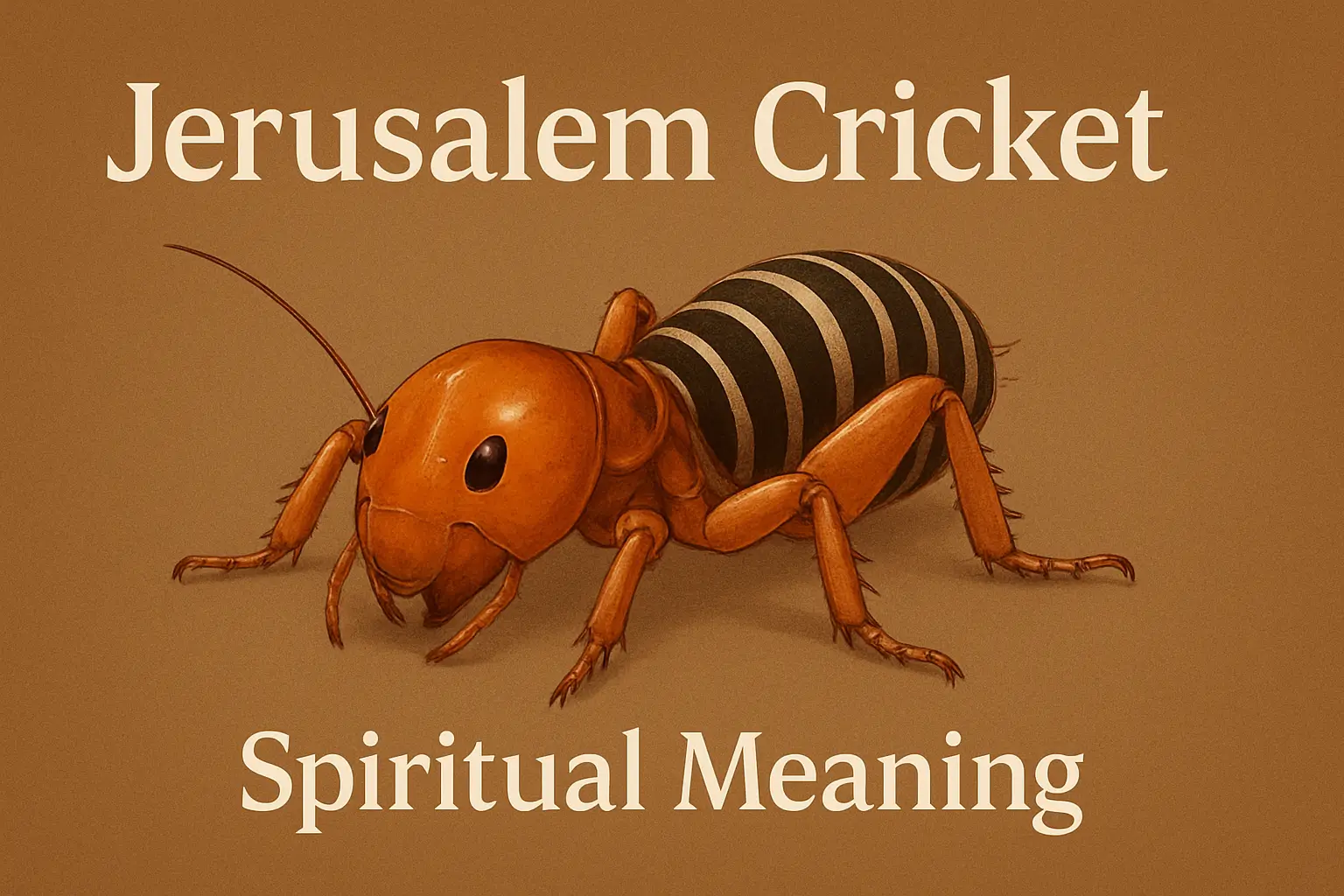
The Jerusalem cricket is a large, flightless insect found mainly in the western United States and parts of Mexico. It is not a true cricket and has no connection to the city of Jerusalem. Scientists classify it under the family Stenopelmatidae.
It lives underground, comes out at night, and feeds on decaying plant matter. Its round, bald head and striped abdomen give it an almost human-like appearance. That appearance is exactly why so many cultures gave it spiritual significance.
It goes by many names including “potato bug,” “skull insect” in Navajo, and niño de la tierra (child of the earth) in Spanish. Each name hints at something deeper about how people perceived this creature across different traditions.
Why Is It Called the “Jerusalem” Cricket?
The name carries a fascinating story rooted in cultural encounter. According to research published in the American Entomologist journal by Stoffolano and Wright (2005), Franciscan priests working with the Navajo people heard them call this insect a “skull insect.”
The priests connected “skull” to Skull Hill, also known as Golgotha outside Jerusalem, the site of the crucifixion of Jesus. This linguistic crossover between Navajo tradition and Christian theology created the name “Jerusalem cricket.”
Another theory suggests that early settlers simply shouted “Jerusalem!” and “Crickets!” as exclamations of shock when they encountered it. Either way, the name itself bridges two spiritual worlds.
Core Spiritual Meanings of the Jerusalem Cricket
1. Grounding and Earth Connection
The Jerusalem cricket spends most of its life underground. In spiritual terms, this makes it a powerful symbol of grounding. It reminds you to stay connected to your roots, your foundation, and the physical world around you.
When this insect appears, it may signal that you have been spending too much time in your head. The message is clear: come back down to earth and stabilize yourself.
2. Inner Strength and Resilience
This insect survives in harsh, dry environments by burrowing deep into the soil. It endures darkness and scarcity with quiet persistence. Spiritually, it represents the strength that comes from within, not from external praise or validation.
Seeing one is often interpreted as a nudge to trust your own inner resources. You are stronger than you think.
3. Facing What Is Hidden
The Jerusalem cricket only comes out at night and lives beneath the surface. In many spiritual traditions, this makes it a symbol of shadow work. It encourages you to look at the parts of yourself you have been avoiding.
This is not a frightening message. It is a compassionate one. The cricket asks you to face hidden fears with the same quiet resolve it uses to navigate the dark soil.
4. Ancestral Wisdom and Connection
Several Indigenous traditions view this insect as a messenger from ancestors. Its underground nature links it symbolically to those who have passed and the wisdom they leave behind. Encountering it can be a spiritual prompt to reflect on your lineage and what has been passed down to you.
5. Transformation Through Solitude
The Jerusalem cricket is a solitary creature. It does not live in colonies or seek company. Spiritually, this solitary existence represents the transformative power of time alone. Growth often happens in silence and away from the crowd.
Native American Spiritual Traditions
The Hopi Tradition: Sösööpa the Kachina
Among the Hopi people of Arizona, the Jerusalem cricket holds a sacred place. It is known as Sösööpa, a katsina (spirit being) that represents a runner or racer in ceremonial events. According to peer-reviewed research published in American Entomologist (Oxford Academic), this kachina was carved into wooden figurines showing a yellow humanlike figure with black beady eyes and a black-and-white plaid skirt.
The Sösööpa kachina is said to both bless participants at racing ceremonies and punish the losers. This dual nature is significant. It teaches that spiritual forces can bring both reward and consequence.
The Hopi also call it qalatötö, meaning “shiny bug,” referencing its polished, bald head. That shininess was associated with spiritual visibility and being seen by higher forces.
The Navajo Tradition: Skull Insect and Healing
The Navajo people called this insect wó see ts’inii, meaning “skull insect,” a name rooted in the creature’s distinctive head shape. The skull reference connected it to mortality and the cycle of life and death. This was not seen as purely negative. It was a reminder of life’s sacred temporariness.
The Navajo also developed healing practices around this insect. If bitten, the traditional cure involved the Yucca plant. This linking of the cricket to both harm and healing reflects a deep understanding that powerful spiritual forces carry dual potential.
The Chumash Tradition: Mirror of the Sea
The Chumash people of southern California held unique beliefs about the Jerusalem cricket. According to research referenced in Wikipedia’s entry on the Jerusalem cricket, Chumash folklore depicts the lobster as the ocean’s mirror of the Jerusalem cricket. This comparison reflects a cosmological view where land and sea balance each other. The cricket represented the terrestrial world’s power and mystery.
The Chumash also associated this insect with mortality. Its striking appearance, to some observers, carried an omen of death. But death in Indigenous spiritual frameworks is rarely purely negative. It is transformation.
Yurok and Wiyot Tribes: Bringers of Mortality
The Yurok and Wiyot tribes of northwestern California held a particularly striking belief. According to academic research, these tribes described an intimidating creature that brought mortality to humans who would otherwise have lived forever. The Jerusalem cricket, in this tradition, is the reason humans are mortal.
This myth places the cricket at the center of the human condition. It is not a villain in this story. It is a necessary force that makes life meaningful by making it finite.
The “Child of the Earth” Spiritual Dimension
In Spanish-speaking communities of Mexico and the American Southwest, this insect is called niño de la tierra, meaning “child of the earth.” This name carries its own spiritual weight. Children are associated with innocence, vulnerability, and connection to creation.
Calling this insect a “child of the earth” suggests that the natural world itself gives birth to wisdom. The cricket emerges from the soil like a thought emerging from the subconscious. It is raw, unpolished, and honest.
In Mexican folklore, encountering a niño de la tierra was sometimes linked to witchcraft warnings. Spanish-speaking communities occasionally associated its bite with danger and dark magic. This reflects how powerful and ambiguous spiritual symbols tend to carry both protective and cautionary meanings depending on the cultural lens.
The Drumming Voice: A Message From Below
The Jerusalem cricket communicates by beating its abdomen against the ground. This creates a vibration that travels through the soil rather than through the air. Other crickets receive this signal through organs in their legs, not their ears.
This is spiritually significant. The message travels underground, below the surface, through the earth itself. Many spiritual traditions interpret this drumming as the language of the underworld or the ancestral realm. The cricket is not just sending a mating call. It is, symbolically speaking, transmitting wisdom from the deep.
If you feel drawn to this insect or keep encountering it, its drumming invites you to listen more deeply. Not with your ears, but with your body and your intuition.
What It Means to See a Jerusalem Cricket?
In Your Home
Finding one inside your home is considered a notable spiritual event. Some Native traditions view it as a sign that ancestral energy is present. It may mean your roots need attention, or that something from your past is ready to be acknowledged and released.
On a Path or Road
Encountering one outdoors, especially at night, is seen as a crossroads moment. The night setting reinforces the theme of navigating the unknown. The message is to trust your inner guidance when the path ahead is unclear.
In a Dream
Dreaming of a Jerusalem cricket is an invitation to do inner work. It points to something buried in your subconscious that is ready to surface. The dream is not frightening in intent. It is an opportunity.
Dead Jerusalem Cricket
Seeing a dead one may signal the end of a cycle or a warning to pay attention to something you have been neglecting. It calls you to check in with your foundations before they weaken.
What To Do When You See One?
Do not kill it:
Most spiritual traditions that hold this insect sacred consider harming it an act of disrespect toward earth energy or ancestral forces.
Pause and reflect:
Ask yourself what area of your life feels ungrounded. What hidden truth have you been avoiding?
Spend time in nature:
The cricket is reminding you of your connection to the earth. Walk barefoot on soil or grass if you can.
Journal the encounter:
Write down when and where you saw it, what you were thinking about, and what is currently challenging in your life. Patterns often become clear when you write.
Meditate on the theme of roots:
Sit quietly and breathe. Visualize your roots going deep into the ground. This practice aligns with the cricket’s core spiritual message.
Color Symbolism and Variations
| Color | Spiritual Meaning |
|---|---|
| Brown (most common) | Grounding, practicality, stability |
| Reddish-brown | Vitality, physical strength, passion |
| Dark/Black | Mystery, shadow work, deep inner wisdom |
| Light tan | Clarity, new beginnings, openness |
Note that color symbolism varies by tradition and is largely interpretive rather than rooted in documented Indigenous belief. Use it as a personal lens, not a fixed rule.
Is the Jerusalem Cricket a Spirit Animal or Totem?
If you find yourself consistently drawn to this insect, encountering it repeatedly, or feeling a deep recognition when you see it, some traditions would suggest it has chosen you as a spirit guide. According to frameworks described at Legends of America, a totem animal is one that accompanies a person through life and teaches them through its qualities.
The Jerusalem cricket as a totem would represent: grounded resilience, comfort with solitude, willingness to do inner work, and the courage to face mortality without fear.
This is not a totem for someone who avoids depth. It calls people who are ready to go beneath the surface of their lives.
Key Takeaways
- The Jerusalem cricket is spiritually linked to grounding, inner strength, shadow work, and ancestral wisdom.
- The Hopi revere it as Sösööpa, a ceremonial spirit being with power over racers and participants.
- The Navajo called it the “skull insect” and connected it to the cycle of life, death, and healing.
- The Chumash associated it with mortality and cosmic balance between land and sea.
- The Yurok and Wiyot traditions credit this cricket with bringing mortality to humankind.
- In Spanish-speaking cultures, it is called niño de la tierra, the child of the earth.
- Its underground drumming is interpreted as messages from the ancestral or spiritual realm.
- Seeing one is a call to ground yourself, face what is hidden, and trust your inner strength.
FAQ
What does it mean when you find a Jerusalem cricket in your house?
Finding one inside your home is often read as a sign that ancestral energy or earth energy is trying to reach you. It may indicate that something rooted in your past is asking for attention. Some traditions see it as a protective presence that guards the home.
Is the Jerusalem cricket a good or bad omen?
It is generally considered a positive sign despite its intimidating appearance. Most traditions that acknowledge its spiritual power see it as a messenger of strength, grounding, and inner wisdom. Only a few traditions associate it with negative omens, and even those frame it within cycles of change rather than simple misfortune.
Does the Jerusalem cricket appear in the Bible?
No, the Jerusalem cricket is not mentioned in the Bible. Its name has a biblical connection through the Navajo word for “skull insect” being linked to Golgotha (Skull Hill) by Franciscan priests. But the insect itself has no scriptural reference.
What does the Navajo tradition say about the Jerusalem cricket?
The Navajo called it the “skull insect” (wó see ts’inii) and connected it to mortality, life cycles, and healing. They also had traditional Yucca plant remedies associated with its bite, linking it to both harm and healing in their medicinal tradition.
What is the Hopi kachina Sösööpa?
Sösööpa is the Hopi spirit being based on the Jerusalem cricket. It appears in racing ceremonies and is carved into katsina dolls as a yellow humanlike figure. It both blesses and punishes participants, teaching that spiritual power carries both grace and accountability.
Can the Jerusalem cricket be a spirit animal?
Yes, within frameworks of spirit animal belief, the Jerusalem cricket can serve as a personal guide. It is typically associated with people who are drawn to depth, introspection, solitude, and honest inner work. If you consistently encounter this insect or feel drawn to it, some traditions would say it has chosen you.
What does it mean to dream about a Jerusalem cricket?
Dreaming of one typically signals that something buried in your subconscious is ready to surface. It is an invitation to explore a hidden truth, fear, or unresolved issue. The dream is rarely negative in intent. It is a call for honest self-reflection.
Why does the Jerusalem cricket drum with its abdomen?
It beats its abdomen against the ground to send vibrations through the soil for communication. Unlike true crickets, it has no wings to rub. Spiritually, this behavior is interpreted as sending messages through the earth itself, connecting it to ancestral realms and underground wisdom.
Why is it also called “child of the earth”?
The Spanish name niño de la tierra reflects its birth from the soil and its earth-bound nature. It emerges from the ground as if born from the earth itself. This name spiritually connects it to creation, innocence, and the raw wisdom that comes directly from nature.
How is the Jerusalem cricket different from a regular cricket spiritually?
A regular cricket is most commonly associated with luck, intuition, and vocal expression. The Jerusalem cricket goes deeper. It is mute in the traditional sense and lives underground, making its spiritual themes darker, more internal, and more ancestral. It is less about outward joy and more about inward courage.
Should I be afraid of the Jerusalem cricket?
No. While it can deliver a painful bite if threatened, it is not venomous. Spiritually, most traditions that acknowledge it treat it with respect rather than fear. Its appearance is startling but its message is one of strength and grounding, not danger.