What is the Spiritual Meaning of Green Cricket?
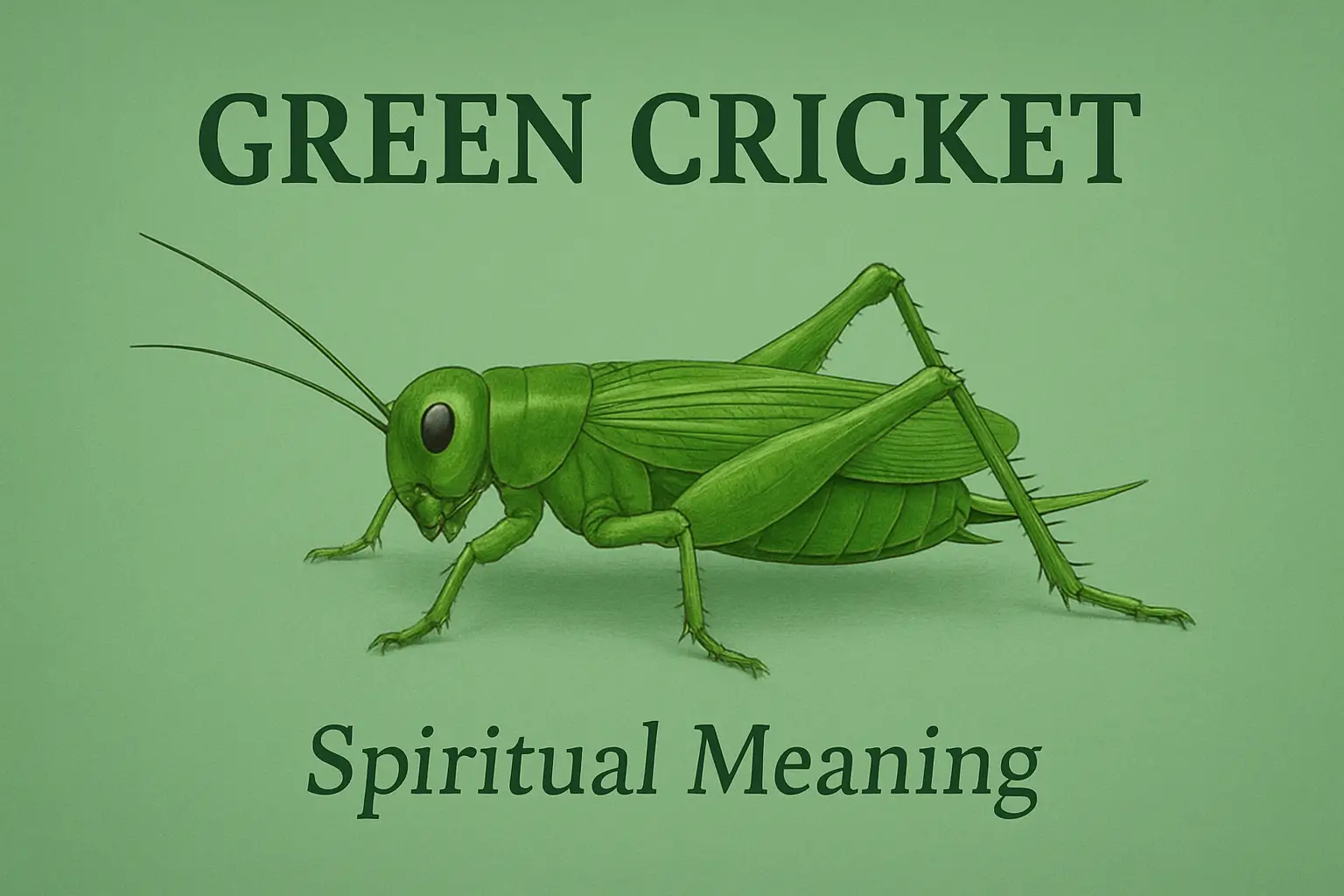
A green cricket is a powerful spiritual symbol. It signals new beginnings, soul growth, luck, and protection across many world traditions. When one appears in your life, most belief systems agree it is a positive sign, not a random encounter.
What Does a Green Cricket Mean Spiritually?
The green cricket combines two layers of meaning. The cricket itself is a universal symbol of good fortune, intuition, and spiritual guidance. The color green adds depth, representing renewal, healing, vitality, and the energy of the living world.
Together, they point to one message: something new and good is beginning.
A green cricket is widely seen as a sign of new opportunities and beginnings. Many spiritual traditions go further, interpreting it as confirmation that you are ready to step onto your own unique spiritual path.
Green crickets symbolize growth, healing, and rejuvenation, and their presence may indicate a time of renewal and transformation in one’s life. In some ancient myths, the green cricket is also linked to longevity.
The Spiritual Significance of the Color Green
Green is not just a color in spiritual traditions. It is a frequency, a signal from the natural world.
Green is often associated with nature, growth, and new beginnings, so a green cricket may symbolize purity, growth, and a fresh start. This makes every green cricket sighting layered with meaning about what stage of life you are entering.
Across faiths and cultures, green is the color of the heart chakra in Hindu and yogic traditions, connecting it directly to love, compassion, and emotional healing. A green cricket appearing during a difficult emotional period may carry a specific message of heart-level recovery.
Green Cricket as a Messenger from the Spirit World
One of the oldest and most widespread beliefs about crickets is that they carry messages from beyond the physical world.
In some cultures, crickets are believed to have a connection to the soul, and if a cricket enters your home, it is believed to be a messenger from the spirit world, bringing a message of hope and guidance.
In certain traditions, the green cricket specifically symbolizes the energy of the soul. This goes beyond general good luck and places the green cricket in a category of deeply personal spiritual contact.
When you see a green cricket, many traditions encourage stillness. Rather than walking away, pause and reflect on what thought or feeling arises in that moment. That inner response may be part of the message.
Cultural Traditions and Their Interpretations
Chinese Tradition
The practice of keeping crickets as pets can be traced back to the Tang Dynasty (618–906 CE), when people first began to appreciate the melodious chirping of these insects. This was not just recreation. It was a spiritual practice.
Crickets symbolize summer and were kept as symbols of luck and virtue. They were also symbolic of courage and high position, and the art of cricket fighting as a sport began in the early Song Dynasty (960–1127).
Imperial concubines of the Tang Dynasty placed captured crickets in small golden cages near their pillows at night for solace. This practice spread to the educated class, making listening to caged crickets a noble and spiritually significant pastime.
Throughout Chinese history, crickets have symbolized wisdom and prosperity to the extent that a 2,000-year period is known as the Cricket Culture, with three specific eras celebrating various aspects of the cricket.
Native American Traditions
In Native American beliefs, crickets are seen as wise spiritual guides whose songs are interpreted as messages from the spirit world, encouraging balance and harmony in life.
The Cherokee see crickets as witty creatures, while the Cheyenne believed they could predict buffalo movement during the hunt. This made the cricket a practical and spiritual partner in daily survival.
The cricket being able to jump is said to represent the power to leap over hardships. For tribes that revered the buffalo, cricket song was considered a reliable signal of what was coming, both physically and spiritually.
Celtic Folklore
In Celtic folklore and mythology, crickets were believed to be enchanted creatures representing mystery and luck. The Celts never killed crickets because of this belief, viewing them as very old creatures with ancient wisdom.
Celtic folklore views crickets as positive, bringing good luck and wisdom into the home, and some stories say they could protect from mischief and magic. Old beliefs claimed crickets had long lifespans and knew the history of the world, earning the name “Old Folks.”
The Celtic tradition also held that a cricket’s chirp could keep away fairies at night and predict the arrival of summer. This seasonal connection mirrors the green cricket’s broader association with renewal and the turning of life’s cycles.
African Traditions
In African traditions, crickets can mean both prosperity and fertility. In some parts of South Africa, they are welcomed in gardens but avoided inside the home due to superstitions.
In many African cultures, crickets are associated with wisdom, intuition, and communication. They are believed to be messengers from the spirit world and are often used in divination and healing rituals.
The interpretation varies by region. In some communities, the cricket’s chirp signals rain, romance, or an important life change. Hearing one near your home could mean a significant relationship is on its way.
Brazilian and Latin American Beliefs
In Brazil, when a cricket chirped it was said that either rain was coming or that you would soon find wealth. But depending on the location, meanings differ.
In the southeastern region of Caraguatatuba, the color of crickets indicates certain events. Green crickets were seen as a symbol of hope, while black predicts illness and gray means money is coming.
This is one of the few traditions that links green specifically to hope, making it one of the most direct cultural endorsements of the green cricket as a uniquely positive sign.
Japanese Tradition
In Japan, crickets and other singing insects have long been kept as pets and admired for their melodic sounds. They symbolize the changing seasons, particularly the arrival of autumn, making the cricket a symbol of reflection, nostalgia, and the passage of time.
Japanese haiku poetry frequently uses crickets to evoke the beauty of seasonal change and the mindfulness of living in the present moment.
Greek Mythology
In Greek mythology, crickets are linked to Aphrodite, the goddess of love, and their chirping was interpreted as a sign of romance and longing, influencing poets to use their presence as symbols of passion.
This connection to love makes the green cricket relevant for those navigating questions of the heart or seeking romantic renewal.
What It Means When a Green Cricket Visits Your Home
A cricket entering your home is treated as a special event in nearly every major tradition.
If you hear a cricket chirping near your home, it means your home is protected from evil spirits. The green version amplifies this with the added energy of growth and new beginnings.
Many people consider crickets to be good omens and believe that the presence of one in your home symbolizes that you are about to come into some good news. Crickets have been associated with bringing genuine happiness into the home.
It is considered bad luck to kill a cricket in almost every tradition that mentions them. Most spiritual teachers recommend gently guiding the cricket outside rather than harming it, out of respect for the message it may be carrying.
Green Cricket as a Spirit and Totem Animal
When the green cricket appears repeatedly in your life, many people consider it their spirit or totem animal.
Those born with a Cricket Totem Animal are naturally insightful, sensitive, and vocal. They may develop musical aptitude with voice or other sounds.
In Native American spirituality, the cricket is often seen as a totem animal representing intuition, creativity, and good luck. Those who have the cricket as their totem animal are said to be sensitive to the energies around them and have a strong connection to the earth and the natural world.
The green cricket as a totem specifically calls you toward new chapters. It asks you to release old patterns and lean into growth with trust and courage.
Green Cricket in Dreams: What It Signals
Seeing a green cricket in a dream carries its own layer of meaning, separate from a physical encounter.
If you hear crickets chirping in your dream, it is a good sign that something you have done in your waking life is coming to fruition.
A green cricket in a dream points toward readiness. It often shows up when a person is on the edge of a major life decision or transition, gently confirming that moving forward is the right move.
Dreaming of a green cricket landing on you is considered especially auspicious. It suggests that good fortune is not just near, it is already touching your life.
The Cricket’s Song and Its Spiritual Role
The chirping sound of a cricket is itself spiritually significant, not just the creature’s appearance.
Cricket’s song is described as a soul song, the music that empowers you to speak your truth with conviction.
Crickets produce their unique song by rubbing their wings together. In China, the cricket’s song has long been seen as a thing of beauty, and crickets were even kept in cages in prominent Chinese houses so that the song could be heard in the home.
Hearing a green cricket chirp near you at night is traditionally a strong sign of spiritual protection. Many traditions hold that its sound vibrates at a frequency that clears negative energy from a space.
Green Cricket vs. Grasshopper: A Key Distinction
Many people confuse green crickets with grasshoppers. Both are green, both jump, but their spiritual meanings differ.
| Feature | Green Cricket | Grasshopper |
|---|---|---|
| Movement | Slow, grounded | Bold leaps forward |
| Core energy | Reflection, patience, inner peace | Big change, bold moves |
| Sound | Night chirping, soul song | Mostly silent |
| Spiritual signal | Inner work and new beginnings | External action and courage |
Grasshoppers represent leaping forward and bold change, while crickets move slowly, symbolizing inner reflection, peace, and patience.
If both appear in your life around the same time, it may be a call to balance inner stillness with outer action.
What To Do When You See a Green Cricket
Do not panic or dismiss it. Pause and take a breath. Most traditions say your first inner response carries the real message.
- Notice what you were thinking just before the cricket appeared. The thought you were having may be the area of life the cricket is speaking to.
- Do not kill it. In nearly every tradition, harming a cricket is considered bad luck and a rejection of the message being offered.
- Reflect on where you are in life. Are you at a crossroads? Starting something new? Healing? The green cricket confirms that forward movement is supported.
- Journal the encounter. Write down the date, location, what you were doing, and how you felt. Patterns over time can reveal a deeper personal message.
- Meditate on the color green. Sit quietly and visualize the green of nature. Ask what area of your life needs growth or healing.
If the green cricket enters your home, many traditions suggest welcoming it briefly and then gently guiding it back outside. This is seen as respectful and preserves the good fortune the cricket brings.
Key Takeaways
- A green cricket is almost universally a positive spiritual sign, signaling new beginnings, growth, and good fortune.
- The green color adds meaning related to soul energy, healing, and the heart.
- Across Chinese, Native American, Celtic, African, and Latin American traditions, crickets are seen as messengers from the spirit world.
- The cricket’s chirping sound is itself spiritually protective and clarity-bringing.
- Killing a cricket is considered bad luck in nearly every tradition that addresses it.
- A green cricket in dreams typically confirms that something positive is already coming to fruition.
- The cricket as a spirit animal points toward intuition, creativity, and a deep connection with natural cycles.
Frequently Asked Questions
Is seeing a green cricket good or bad luck?
Seeing a green cricket is considered good luck in the vast majority of spiritual traditions worldwide. Nearly every culture that addresses cricket symbolism, from Chinese to Celtic to Native American, treats the cricket as a bearer of positive energy. The green color specifically adds hope, growth, and soul renewal to that positive message.
What does it mean when a green cricket lands on you?
Others have suggested that a cricket landing on you symbolizes that you are now in the right place to receive the good luck and abundance you may have been seeking, and that the good fortune associated with crickets is perhaps even amplified in this case. It is considered one of the stronger signs that blessings are imminent.
What does a green cricket in my house mean spiritually?
A green cricket entering your home is widely seen as a guardian arriving to protect the space and signal incoming good news. It combines the luck of a cricket with the renewal energy of the color green. Most traditions recommend welcoming it calmly rather than removing it immediately.
Does the green cricket have a specific meaning in Wicca or pagan traditions?
In Wiccan and broader pagan practice, crickets are seen as earth-connected beings linked to natural cycles and intuition. The green cricket aligns with the earth element and green magic, which focuses on growth, abundance, healing, and fertility. It is often viewed as a sign that spellwork related to new beginnings or prosperity is well-timed.
What does it mean to find a dead green cricket?
A dead cricket generally signals the end of a cycle rather than pure bad luck. It can mean a phase is closing, creating space for a new one to open. In some traditions, a dead cricket is a reminder not to cling to what has already passed. It asks you to let go and trust what is coming.
Is there a difference between a green cricket and a green grasshopper spiritually?
Yes. While they look similar, they carry different energies. The green cricket is associated with inner reflection, patience, soul work, and steady transformation. The grasshopper is more connected to bold leaps, courage, and sudden outward change. Crickets also make sound, which adds the layer of soul song and communication. Grasshoppers are mostly silent.
What does it mean when a green cricket chirps near you at night?
Night chirping from a green cricket is widely interpreted as spiritual protection and a sign of peace. The sound is believed in many traditions to clear negative energy and confirm that your space and path are safe. It can also be a call to listen more carefully to your inner voice.
Can a green cricket be a sign from a deceased loved one?
Many people who practice spirit communication or hold beliefs in ancestral connection believe that crickets can serve as vessels for messages from the departed. In some Native American traditions, crickets are seen as messengers of the spirit world, bringing messages from ancestors or spirits. If a green cricket appears shortly after a loss, many find comfort in treating it as a signal that the loved one is at peace and nearby.
What does a green cricket mean in Indian traditions?
Indian traditions use green crickets to heal heartache, and the green cricket is connected to the energy of the soul in these interpretations. This makes it particularly meaningful for those going through emotional pain or grief, as the green cricket is seen as a natural remedy offered by the universe itself.
Should I be worried if a green cricket keeps appearing?
No. Repeated appearances of any cricket, especially a green one, are generally considered a strong and sustained blessing. It may mean the universe is being particularly emphatic about the message it is sending. Rather than worry, treat it as confirmation that you are on the right path and that growth is actively happening in your life.
This article is intended for educational and spiritual reflection purposes. Symbolism and spiritual interpretations are belief-based and vary by culture and tradition. They do not constitute factual, scientific, or professional advice.