What Does Red and White Wool Symbolize Spiritually?
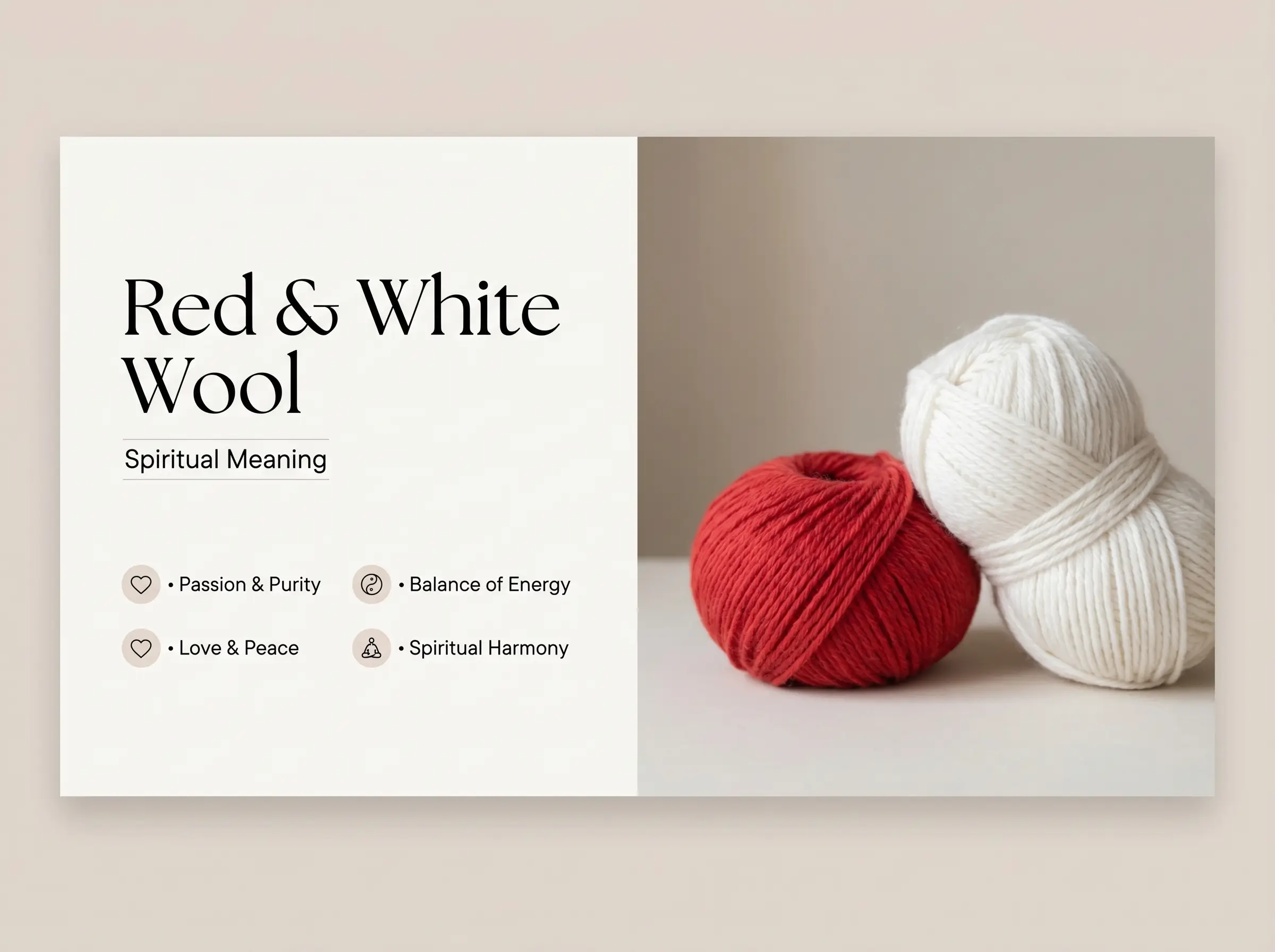
Red wool spiritually symbolizes life force, protection, passion, and power, while white wool represents purity, divine grace, innocence, and spiritual cleansing. Together, they create one of the most potent dual-color symbols in the spiritual world, a pairing that balances earthly vitality with heavenly purity. This combination appears in Jewish Kabbalah, Hindu ceremony, African ancestral traditions, Celtic folk magic, Native American healing, and the Yazidi faith.
But the full meaning goes much deeper than a quick summary. Red and white wool each carry layered histories, ritual applications, and spiritual messages depending on how they appear and which tradition you are reading them through. This article explores every major interpretation — by color, tradition, scenario, and practical use.
The Core Symbolism: Why These Two Colors Together?
Red is the color of blood — the first color humans biologically register. It has been associated with life, vitality, danger, love, and sacrifice since the earliest recorded human history. White is the color of light, snow, and what is untouched. In spiritual terms, red covers the body and its fire, while white covers the soul and its purity.
When you combine these two in a wool thread, garment, or ritual cord, you are not mixing contradictory forces — you are completing a picture. White symbolizes faith, peace, and purity while red symbolizes strength, love, beauty, and life. Together, they represent a whole human being — alive and pure, protected and faithful.
Wool itself adds another layer of meaning. It comes from a living creature — the sheep — and has been used since antiquity in rituals, priestly garments, and sacred offerings. The wool of sheep, stewarded by shepherds, became a symbol for the purity of a God-forgiven soul. The material already carries divine symbolism before any color is applied.
The Spiritual Meaning of White Wool Across Traditions
White Wool in the Bible and Christianity
White wool is one of the most referenced spiritual symbols in the Bible. The Hebrew word for wool (tsemer) appears in contexts ranging from priestly garments to visions of God himself. The most famous verse is Isaiah 1:18: “Though your sins are like scarlet, they shall be as white as snow; though they are red like crimson, they shall become like wool.”
In this verse, red represents sin and white wool represents the forgiven soul. Daniel uses the same word to describe God in a vision: “His clothing was white as snow, and the hair of His head like pure wool.” The word for “pure” there comes from a root meaning ‘innocent or blameless’ — making white wool a symbol not just of human purity, but of divine holiness.
White wool carries a deep spiritual significance of protection and safety. It is associated with purity, peace, and a sense of divine security across many traditions. The comforting warmth and softness of white wool serve as potent symbols of spiritual protection — as if being enwrapped in divine care.
White Wool in Islamic Tradition
In Islam, white holds the highest symbolic status among colors. White is worn during Hajj pilgrimage — the ihram garments are simple white cloth, representing equality before Allah and spiritual purity. Natural white wool, as an undyed material from a living creature, carries this same quality of humility and spiritual readiness. The tahara (purification) principle, central to Islamic worship, finds a natural expression in white wool’s symbolism.
White Wool in Celtic and Ancient Traditions
White wool symbolizes the benevolent guidance and protection offered by a higher power. It represents the divine will guiding us through life, ensuring safety and well-being. In Celtic and pre-Christian European traditions, white wool appeared in rituals for peaceful transitions, healing, and protecting the vulnerable — particularly newborns and the dying.
The Spiritual Meaning of Red Wool Across Traditions
Red Wool in Kabbalah and Jewish Mysticism
This is the most globally recognized red wool tradition in the world today. Wearing a thin scarlet or crimson string (khutt hashani) is a Jewish folk custom practiced as a way to ward off misfortune brought about by the “evil eye.” The red string itself is usually made from thin scarlet wool thread, worn as a bracelet on the wrist.
According to tradition, the string must be made of red wool. It is taken to the city of Bethlehem in Israel and wrapped seven times around the ancient tomb of the biblical Matriarch Rachel — known for her boundless compassion and protection over her children. Kabbalists believe the string absorbs her protective, maternal energy.
The Red String is worn on the left wrist — the left representing the desire to receive — creating a protective shield that fends off negative energy. The string is knotted seven times while a protective prayer is recited. The tradition gained global recognition in the late 1990s when many celebrities began wearing it publicly.
Red Wool in the Bible: The Scarlet Thread
The red wool tradition in Kabbalah has roots in a specific biblical story. A scarlet thread tied about the wrist is mentioned in Genesis 38 — the midwife ties it around the wrist of the firstborn twin to mark his birth order. This ancient act of marking and protecting with a red thread echoes through millennia of Jewish folk practice.
Red wool also carried a formal role in Yom Kippur. In the Yom Kippur service described in Mishnah Yoma 6:6, a red wool thread is tied to the scapegoat’s head to mark its role in the atonement rite. It functioned as a boundary indicator between sacred and profane spaces during purification.
Red Wool in Hinduism
Hinduism views the red string as a symbol of protection and blessing. Called “raksha,” these bracelets are often blessed by spiritual leaders and worn during important ceremonies. The Kalava or Mauli — a red thread — is tied around the wrist during religious ceremonies as a mark of divine blessing. In Hindu symbolism, red is the color of Shakti, the divine feminine energy, and is associated with weddings and births.
Red Wool in Celtic and Slavic Folk Traditions
Red wool was applied to relieve sprains in Scotland, sore throats in Ireland, and to prevent fevers in Macedonia. This widespread folk medicinal use points to a deep-rooted belief across pre-Christian Europe that red fiber carried healing and protective energy.
In Slavic traditions, red thread was tied around wrists or woven into clothing to protect against the evil eye. Brides wore red as a symbol of fertility and vitality, and babies were wrapped in red cloth to keep away harmful spirits. The color was not decoration — it was a protective spell woven into everyday life.
Red Wool in Native American Traditions
Red is associated with the south direction in many Native traditions, symbolizing warmth, growth, and energy. In healing rituals and dances, crimson paint or fabric is employed to safeguard, invigorate, or pay homage to spirits. The color invokes strength from ancestors and the Earth.
For the Navajo, red may symbolize protection; for the Lakota, it may represent courage or direction. Red fibers carry protective energy in Native American ceremony — a concept that aligns remarkably with how red is used in cultures thousands of miles away.
Red Wool in African and Zulu Spiritual Traditions
In Zulu and Southern African spiritual practices (Sangoma traditions), colored wools (ibhidane) carry specific ancestral meanings. Red is an active, warrior-energy color — associated with bravery, confronting spiritual enemies, and ancestral protection. Red ancestral cloth is linked to spiritual initiation, courage, and the spirit of warrior ancestors. Many practitioners believe red wool connects the wearer directly to those protective ancestral forces.
Red Wool vs. White Wool Spiritual Symbolism
| Aspect | Red Wool | White Wool |
|---|---|---|
| Core Energy | Active, protective, life-giving | Purifying, divine, receptive |
| Spiritual Theme | Vitality, courage, love, warding off evil | Purity, innocence, holiness, peace |
| Biblical Role | Scarlet thread (Genesis 38), Yom Kippur | Divine purity (Isaiah 1:18, Daniel 7:9) |
| Kabbalistic Use | Protection bracelet against evil eye | Symbol of the forgiven soul |
| Hindu Use | Raksha — blessing and protection | Ritual cleanliness, peace |
| Celtic/Slavic Use | Healing, warding evil, bride’s vitality | Ritual purity, peaceful transitions |
| African/Zulu | Ancestral courage, warrior protection | Royalty, spiritual openness |
| Dream Symbolism | Passion, protection, urgent message | Peace, forgiveness, divine favor |
Red and White Wool Combined: Across Major Traditions
Yazidi Tradition
One of the most beautiful examples of red and white wool combined comes from the Yazidi people. They wear a sacred cord called the Dazik — two strings spun from sheep’s wool, one dyed red and one white, twisted together. White symbolizes faith, peace, and purity while red symbolizes strength, love, beauty, and life. When blessed and worn, the combined cord is believed to give the wearer strength, peace, and protection simultaneously.
Slavic Pagan Traditions
Red dominated traditional Slavic embroidery — stitched into borders, around necklines, on baby linens, and ceremonial towels (rushnyk). These edges were considered vulnerable spots where bad energy or spirits could slip in, so red threads created a symbolic shield.
White fabric served as the base — representing the pure canvas of life — while red embroidery served as the protective boundary. Together, they turned everyday cloth into spiritually complete, protective garments.
Christianity: Liturgical Colors
In Christian liturgy, white is worn during Christmas, Easter, and baptisms — representing resurrection, rebirth, and divine purity. Red is worn on Pentecost and martyrs’ feast days, representing the blood of Christ and the Holy Spirit’s fire.
Together, red and white cover the full arc of Christian spiritual life — the purity of divine relationship (white) and the sacrificial fire that sustains it (red).
9 Common Scenarios: What Red and White Wool Mean in Different Situations
1. Wearing Red Wool on the Left Wrist
This is one of the oldest and most globally practiced spiritual uses of red wool. Whether in Kabbalistic tradition, Hindu kalava practice, Celtic folk magic, or Slavic protective custom, red wool on the left wrist is understood as a spiritual shield. It is worn on the left wrist — left representing the desire to receive — creating a protective barrier that fends off negative energy. The physical act of wearing it is itself a declaration of spiritual intention.
2. Wearing Red and White Wool Together
When red and white are deliberately spun or worn together — as in the Yazidi Dazik — the spiritual message is one of completeness and balance. The wearer is not simply protected or simply pure; they are both. Many practitioners believe combining these colors creates a harmonious shield that covers both the physical and spiritual dimensions of the self.
3. Dreaming of White Wool
Dreaming of white wool can symbolize inner peace, forgiveness, or purity. In a biblical framework, it connects to the Isaiah 1:18 imagery — a sign that spiritual cleansing is available to you. Many traditions interpret this dream as a divine affirmation: you are being cared for, protected, and seen.
4. Dreaming of Red Wool or Red Thread
Dreaming of red wool signals an urgent spiritual message about protection, passion, or life force. It can indicate that you need to be more vigilant about the energy you allow into your space. In African ancestral traditions, dreaming of red cloth or cords is often interpreted as a message from warrior ancestors that their protective presence is active in your life.
5. Red Wool Tied by a Loved One
The ritual of having a loved one tie red wool around your wrist is specifically important in Kabbalistic tradition. The string is tied with seven knots while a blessing is spoken — and the act of another person tying it represents the transfer of love. That love is sealed as a protective energy, making the ritual a shared spiritual act rather than a solitary one.
6. Red Wool Used for Healing
Across Celtic Scotland, Ireland, and Macedonian folk practice, red wool was applied directly to the body for healing. Red wool was tied to relieve sprains in Scotland, sore throats in Ireland, and to prevent fevers in Macedonia. The spiritual logic was consistent: red carries life force, and life force heals.
7. White Wool as a Sacred Garment
In biblical tradition, wool played a specific role in sacred identity. Wool signifies celestial truth — the truth of the good of love. White wool in a dream or vision can indicate that you are approaching something sacred, or being invited into a spiritual understanding that comes from love rather than formal doctrine.
8. Red and White Wool in Ancestral Offerings
In African and African-diaspora spiritual practices, placing colored wools on an ancestral altar is a form of active communication with those who have passed. Red alongside white carries the dual message of vitality (the ancestors were fully alive) and peace (they are now in spiritual rest). Together, they honor the complete existence of the beloved dead.
9. Red Wool That Fades or Falls Off
In Kabbalistic tradition, the Red String is expected to eventually fray and fall off on its own. This is interpreted as the string completing its protective work — it absorbed what it was meant to absorb. Many practitioners interpret a fallen wool thread as a signal to give gratitude for protection received and consciously choose whether to renew the practice.
Red and White Wool Across 7 Traditions
| Tradition | Red Wool Meaning | White Wool Meaning | Combined Meaning |
|---|---|---|---|
| Kabbalah (Judaism) | Protection from evil eye | Purity of the forgiven soul | Complete spiritual shield |
| Christianity | Holy Spirit fire, martyrs’ blood | Divine purity, resurrection | Sacrifice and redemption |
| Hinduism | Raksha — protection, life force | Ritual cleanliness, peace | Blessed and protected life |
| Yazidi | Strength, love, beauty, life | Faith, peace, purity | Strength + faith = full protection |
| Celtic / Slavic | Healing, warding evil, vitality | Pure canvas, peaceful transitions | Life guarded by purity |
| Native American | South direction, warmth, courage | New beginnings, spiritual openness | Earth power and spiritual clarity |
| African / Zulu | Warrior ancestors, bravery | Royal ancestors, divine connection | Full ancestral covering |
Red and White Wool by Spiritual Purpose
| Purpose | Which Color | Form Used | Tradition |
|---|---|---|---|
| Evil eye protection | Red | Wool bracelet (left wrist) | Kabbalah, Hindu, Celtic |
| Spiritual purification | White | Garment, ritual cloth | Christianity, Islam |
| Ancestral communication | Red + White | Altar cord, ibhidane | Zulu / African traditions |
| Healing physical ailments | Red | Tied directly to body | Scottish, Irish, Macedonian |
| Marking sacred identity | White | Priestly garment | Biblical / Jewish temple rites |
| Fertility and marriage | Red | Bridal cord, wrist thread | Hindu, Slavic |
| Complete spiritual protection | Red + White | Spun together (Dazik) | Yazidi |
| Atonement ritual | Red | Thread on scapegoat | Ancient Jewish (Yom Kippur) |
What to Do: Practical Spiritual Uses of Red and White Wool
Always remember that intention is the most important ingredient. The wool itself is a vehicle — the sincerity and clarity you bring to it determines its real meaning.
Wearing a red wool bracelet for protection:
Tradition calls for red wool (not synthetic thread), tied by someone who loves you, on the left wrist, with seven knots. A blessing or prayer spoken at the time of tying adds spiritual weight. When it falls off naturally, express gratitude and decide whether to renew the practice.
Creating a red and white altar cord:
Twist a strand of red wool and a strand of white wool together — as in the Yazidi Dazik — and place it on your altar. This invokes both vitality (red) and peace (white) in your sacred space. It is particularly meaningful when honoring ancestors during significant life events.
Using white wool for space cleansing:
Many practitioners lay white wool at the four corners of a room or at the entrance of a home during spiritual cleansing. This marks the space as pure and invites peaceful, protective energy in. Replace it during new moons or after major disruptions.
Red wool for healing:
Drawing from the Scottish and Irish folk tradition, gently wrap red wool around a sore area of the body while holding a clear intention for healing. The warmth of the wool and the intentionality of the act combine the physical and spiritual dimensions of care.
Wearing both colors consciously:
Choosing to wear red and white together — as a bracelet, cord, or garment — is a statement of spiritual completeness. In many traditions, this combination is considered the most balanced and comprehensive form of personal spiritual protection available.
Important note:
If you belong to a specific religious tradition — Jewish, Hindu, Christian, or otherwise — always seek guidance from within that tradition before adopting its practices. Spiritual tools carry the most power when used with genuine respect for their origins.
Key Takeaways
Red wool and white wool are among the oldest and most universally recognized spiritual symbols in human history. They form a language of protection, purity, and life that crosses nearly every cultural and religious boundary.
Red wool is active. It stands for life, power, love, and protection — the fierce energy of living things. Across Kabbalah, Hinduism, Celtic folk practice, African spirituality, and Native American tradition, red wool says: I am alive, and I am protected.
White wool is receptive. It stands for purity, peace, and divine favor — the quality of a soul that has been cleansed. In the Bible, Islamic practice, and ancient priestly ritual, white wool says: I am clean, and I am worthy.
Together, they form one of the most complete spiritual statements a person can make: I am alive and pure. I am protected and open. I am in this world and reaching beyond it.
Frequently Asked Questions (FAQs)
Q1: What does red and white wool symbolize spiritually?
Red and white wool together symbolize the balance of vitality and purity. Red represents life force, courage, and protection against negative energy. White represents purity, divine favor, and spiritual cleansing. Combined, they create a complete spiritual shield covering both the physical and spiritual dimensions of a person.
Q2: What does red wool mean spiritually?
Red wool is a symbol of protection, life energy, and courage. Across Kabbalah, Hinduism, Celtic folk traditions, African spirituality, and Native American ceremony, it is used to ward off evil, honor warrior ancestors, and celebrate the life force. It is an active, outward-facing spiritual energy.
Q3: What does white wool mean in the Bible?
In the Bible, white wool represents divine purity and the state of a forgiven soul. Isaiah 1:18 uses the image of wool-white to describe what happens to sins when God forgives them. In Daniel 7:9, God himself is described as having hair “like pure wool” — making white wool a symbol of divine holiness.
Q4: Why is the Kabbalah red string made of wool specifically?
The red string must be made of red wool because wool comes from a living creature and carries the symbolism of natural warmth and protection. Traditionally, it is sourced from Safed, wound seven times around Rachel’s Tomb in Bethlehem, and blessed through prayer. The wool’s living origin is considered essential to its spiritual authenticity.
Q5: What does it mean to dream of red wool?
Dreaming of red wool generally signals an urgent spiritual message about protection, vitality, or an active ancestral presence. It can indicate that you need to strengthen your spiritual boundaries or that a matter requiring courage is before you. In African traditions, it often signals that warrior ancestors are actively watching over you.
Q6: What is the Yazidi red and white wool tradition?
The Yazidi people wear a sacred cord called the Dazik — two strings of sheep’s wool, one red and one white, spun together. White symbolizes faith, peace, and purity; red symbolizes strength, love, beauty, and life. When blessed and worn together, the cord is believed to give the wearer simultaneous strength and peace.
Q7: Is there a difference between wearing red wool and white wool for spiritual protection?
Yes. Red wool is used for active, outward protection — specifically against the evil eye, jealousy, and spiritual attacks. White wool is used for inner purification and marking sacred space. Many practitioners believe wearing both together creates the most complete protection, covering both inner and outer spiritual dimensions.
Q8: What does red wool mean in African spiritual traditions?
In Southern African Sangoma traditions, red wool and red ancestral cloth are associated with warrior ancestors, bravery, and active spiritual protection. Red is the color of those who fought — spiritually and physically. Working with red wool invokes their strength and protective power into the present moment.
For further reading on the traditions referenced in this article, visit: Wikipedia — Red String (Kabbalah), The Kabbalah Centre — The Red String, and Westminster Theological Seminary — The Wool of Advent.