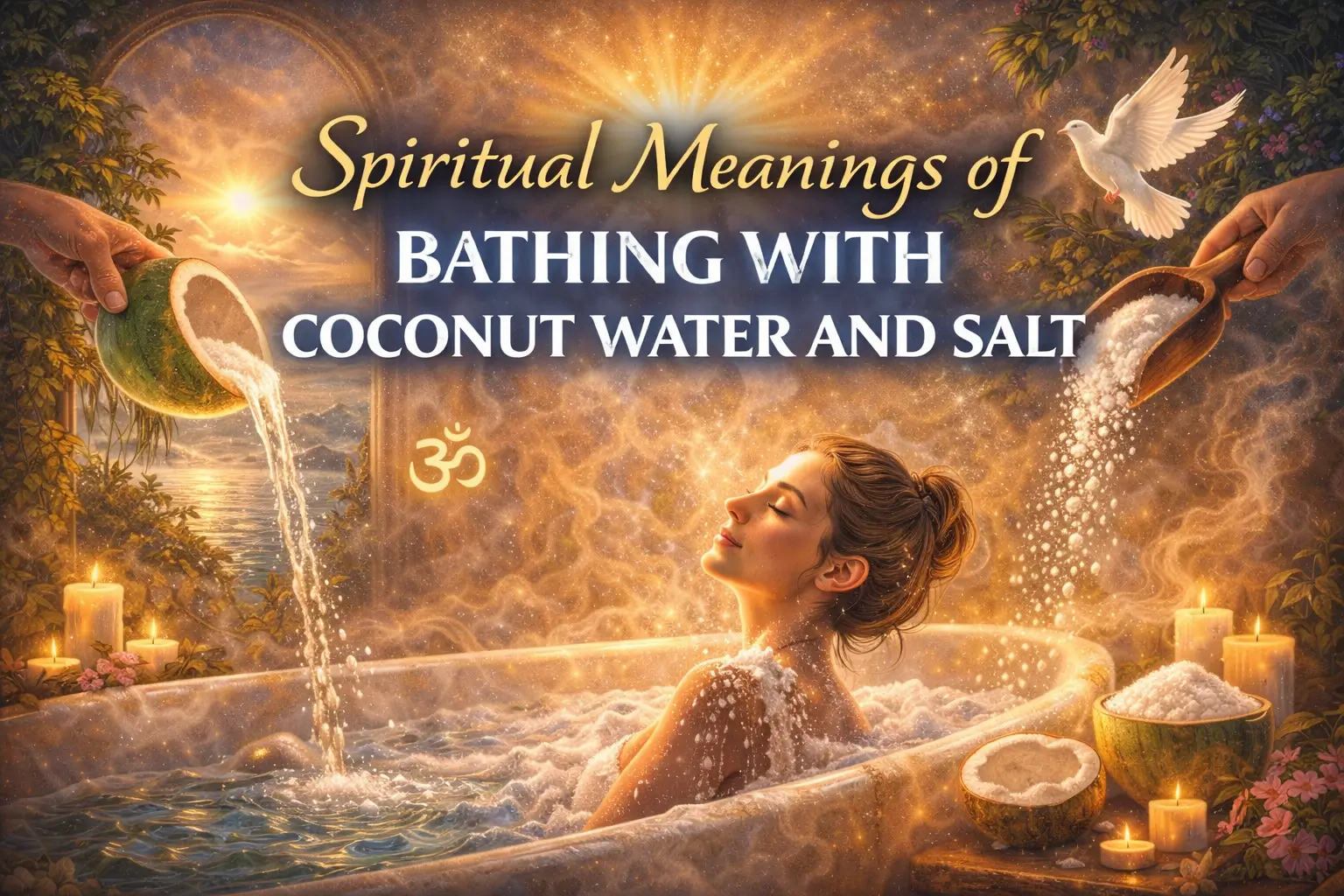
10 Spiritual Meanings of Bathing With Coconut Water and Salt
Bathing with coconut water and salt is a spiritual cleansing practice used across many traditions to remove negative energy, purify the aura, attract blessings, and restore spiritual balance. It combines the sacred purifying power of coconut water, revered in Hinduism, Yoruba, Santería, and Hoodoo, with the universal protective energy of salt, used since ancient times to ward off evil and create spiritual boundaries.
This practice goes far deeper than a simple bath. Different traditions use it for different goals, with specific rituals, timings, prayers, and intentions attached to each use. This article explores what each tradition teaches, when to use this bath, what it means across 10 different scenarios, and how to perform it correctly for the best results.
What Does Bathing With Coconut Water and Salt Mean Spiritually?
The spiritual bath is one of humanity’s oldest cleansing rituals. Water has always represented purification, and adding sacred elements like coconut water and salt turns a simple wash into a powerful act of intention.
According to Wikipedia, Hoodoo, one of the most prominent traditions using salt baths, is rooted in West African spiritual practices that were carried to the Americas through the transatlantic slave trade. Salt baths in this tradition are taken specifically to cleanse the soul and spirit.
Coconut water is equally revered. WisdomLib documents its sacred role across Hinduism, Ayurveda, and Vaishnava traditions, where it is considered auspicious and used in rituals for purification, rejuvenation, and divine connection.
Salt has been a symbol of preservation and purity across virtually every civilization. The ancient Egyptians used it in embalming rites. Romans sprinkled it on sacrifices. In Catholicism, salt is blessed and added to holy water for protection. In Shinto practice in Japan, it is scattered after funerals to purify spaces.
When these two elements are combined in a ritual bath, the result is a powerhouse cleanse. The coconut water lifts spiritual residue and reconnects the bather to divine energy, while the salt absorbs negativity and creates a protective boundary around the aura.
The History and Cross-Cultural Roots of This Practice
Understanding where this practice comes from helps you use it with greater respect and effectiveness. No single tradition owns it. Many arrived at similar practices independently, which speaks to how universal the need for spiritual cleansing truly is.
Hinduism and Ayurveda
In Hinduism, the coconut is one of the most sacred fruits. It is offered to deities, broken as a symbol of surrendering the ego, and used in a ritual called abhisheka, where sacred objects or deities are bathed with coconut water to purify them and attract divine blessings.
According to Hindu Blog, coconut water is seen as a natural cleanser both physically and spiritually. It is used in Hindu rituals to purify spaces, individuals, and sacred objects, and is believed to remove negative energies and foster purity.
Ayurveda, the ancient Indian system of healing closely linked to Hinduism, classifies coconut water as a natural coolant that balances the body’s doshas (Vata, Pitta, Kapha). Bathing with it is considered both a physical and energetic reset.
Yoruba Religion and the Orisha Tradition
In the Yoruba cosmology of West Africa, the coconut is known as Obí and is considered sacred. It carries ase, the divine life force that connects all living things. Coconut is offered to specific Orishas (divine spirits) including Eleguá, the guardian of crossroads, and Obatalá, the Orisha of wisdom, peace, and purity.
Ashepami Cuba describes the coconut as one of the most spiritually powerful elements in Yoruba-based practice, widely used in purification baths, ritual cleanings, and ceremonies.
Salt in Yoruba tradition is also used for protection and cleansing. Combined with coconut water in a bath, the two amplify each other’s spiritual properties.
Santería and Candomblé
Santería is an Afro-Caribbean religion that blends Yoruba spirituality with Roman Catholicism. It originated in Cuba during the 19th century and is practiced across Latin America, Europe, and North America. Ritual baths called limpias are central to its practice.
Spells8 notes that in Santería and Candomblé, coconut water is associated with spiritual purification and protection, frequently used in limpias to cleanse the aura and connect with divine forces.
In these traditions, a coconut water and salt bath is not casual. It is a deliberate act of communication with the divine.
Hoodoo (African American Rootwork)
Hoodoo is a complex spiritual system developed by enslaved African Americans, blending West African traditions with Native American plant knowledge and Christian folk practice. Ritual baths are central to Hoodoo work.
Lucky Mojo, one of the most respected resources on Hoodoo practice, states that the oldest ritual baths known to humankind involve pure water combined with salt, minerals, herbs, and roots. Salt is used specifically for soul and spirit cleansing.
In Hoodoo, the direction of pouring matters. Pouring water from head downward removes negativity. Pouring from feet upward draws in blessings. Timing also matters, with baths typically performed before sunrise.
Wicca and Modern Pagan Practice
In Wicca, salt and water are two of the four sacred elements used in ritual. Salt dissolved in water creates what practitioners call holy water or blessed water, used for purifying tools, spaces, and the self. Some Wiccan traditions trace this practice to the Key of Solomon, a historical grimoire that includes prayers for consecrating water with salt.
Wicca treats the coconut water and salt combination as an alignment with both earth (salt) and water (coconut water), making the bath a powerful elemental cleanse.
Cross-Tradition Comparison Table
| Tradition | Name for the Practice | Primary Purpose | Key Belief About Salt | Key Belief About Coconut Water |
|---|---|---|---|---|
| Hinduism | Abhisheka / Ritual Bath | Purification, divine blessing | Used in prasad and temple rites | Sacred, auspicious, connected to Lakshmi |
| Yoruba | Spiritual Cleanse | Removing spiritual blockages | Protective and boundary-setting | Sacred (Obí), carries ase (life force) |
| Santería | Limpia | Aura cleansing, Orisha connection | Drives away malevolent spirits | Offered to Orishas, highly purifying |
| Hoodoo | Spiritual Bath / Rootwork | Uncrossing, removing jinxes | Cleanses the soul and spirit | Cleanses negativity, refreshes the spirit |
| Wicca | Elemental Cleanse | Purification, intention-setting | Sacred earth element | Sacred water element |
| African Traditional | Ritual Washing | Ancestral connection, protection | Absorbs negative energy | Represents vitality of the soul |
10 Spiritual Scenarios and What They Mean
1. Bathing for Spiritual Cleansing and Removing Negative Energy
This is the most common reason people turn to a coconut water and salt bath. When you feel weighed down, emotionally drained, or like something invisible is holding you back, this bath is designed to lift that weight.
Salt is the spiritual absorber. It draws out energetic residue from your aura the same way it draws moisture from food. Coconut water then refreshes and rehydrates the energy field, leaving it clean and receptive.
In Hoodoo, this bath is performed by pouring the mixture from head to feet, allowing negativity to drain downward and away from the body. The bath water is traditionally disposed of at a crossroads or tossed toward the east at sunrise, symbolically releasing the negative energy to the four corners of the earth.
You may also light a white candle before the bath. White represents purity and clarity in most traditions that use this ritual.
2. Bathing to Attract Good Luck and Open Doors
In West African and Afro-Caribbean traditions, this bath is used to open blocked pathways in life. Think of it as clearing the road so blessings can actually reach you.
Eleguá, the Yoruba Orisha of crossroads and opportunities, is closely associated with coconut. Bathing with coconut water is a way of honoring this energy and asking for doors to open in your career, relationships, or finances.
To use this bath for luck, some practitioners pour the mixture from feet upward toward the head. This upward motion is symbolic of drawing energy into your life rather than washing it away. Setting a clear intention before bathing is considered essential for this purpose.
This variation is especially popular in Nigerian and Ghanaian spiritual practices, where the combination of coconut water, salt, and prayer is used before important events, job interviews, or new beginnings.
3. Bathing to Break a Curse or Remove a Spiritual Attack
If you believe someone has sent negative energy toward you intentionally, whether through envy, spoken words, or deliberate spiritual work, this bath is used as a countermeasure.
Salt’s role here is critical. Across multiple traditions including Hoodoo, Santería, and African traditional religion, salt is specifically known to neutralize hexes, jinxes, and crossed conditions. It breaks the energetic link between you and the attack.
In Hoodoo, a 7-day or 13-day bath regimen is often prescribed for serious spiritual attacks. Each bath chips away at the negative condition layer by layer until the energy is fully cleared. The coconut water adds a renewing quality, helping your aura rebuild and strengthen after the negative energy has been removed.
Never dispose of this bath water inside your home. Take it outside and pour it away from your doorstep, symbolically moving the energy out of your space.
4. Bathing for Money, Abundance, and Financial Blessings
This is one of the most searched uses of coconut water and salt in West African spiritual circles. The bath is used to remove spiritual blocks that are preventing wealth from flowing into your life.
The belief is that poverty is sometimes not just a material condition. It can be a spiritual one, caused by stagnant energy, unresolved ancestral patterns, or the effects of envy from others. The salt clears the blockage while the coconut water, associated with fertility and abundance in many traditions, invites the flow of prosperity.
Practitioners often recite specific Psalms or prayers during this bath. Psalm 23 and Psalm 91 are commonly used in Hoodoo-influenced practices. Affirmations or intentions spoken aloud during the bath are believed to be amplified by the sacred elements in the water.
5. Bathing Before a Major Life Event or New Beginning
Many traditions recommend performing a spiritual bath before any major transition, including starting a new job, getting married, moving into a new home, or beginning a new business.
The logic is practical. You want to enter new energy without carrying old baggage. The salt clears residual energetic debris from past experiences, and the coconut water aligns your aura with abundance, purity, and divine favor.
In Hindu tradition, coconut water is used in rituals marking new beginnings because the coconut is considered deeply auspicious. Starting something important after a coconut water bath is seen as inviting divine blessing and protection from the very first step.
This bath is also recommended after a period of illness, grief, or emotional hardship. It helps signal to your energy field that the old chapter has ended and a new one is beginning.
6. Bathing to Attract Love and Strengthen Relationships
Coconut is associated with fertility, nourishment, and care in many traditions. A bath with coconut water and salt can be used to cleanse away emotional wounds, soften the heart, and open yourself to giving and receiving love.
The salt in this context removes bitterness, resentment, and the energetic residue of past relationships that may be blocking new love from entering. It acts as an emotional detox as much as a spiritual one.
This bath is not typically used to manipulate another person into loving you. Instead, it is used to make yourself more energetically open, warm, and attractive to love in general. The intention is self-healing and self-preparation rather than control.
For those already in relationships, this bath can be used to clear accumulated tension, misunderstandings, or emotional distance. Bathing with the intention of releasing what no longer serves the relationship is a common application.
7. Bathing for Protection Before Travel or Dangerous Situations
Salt has been used as a protective boundary for centuries across cultures. In Shinto practice, salt is scattered after funerals to prevent spirits from following mourners home. In Catholicism, it is blessed and used to drive away evil. In Hoodoo, it is thrown behind troublesome people to prevent their return.
A bath combining salt and coconut water before travel or a potentially dangerous situation is intended to create a spiritual shield around the body. The hard shell of the coconut, which symbolizes protection in many traditions, lends its energy to this bath.
Practitioners in Nigerian and Caribbean traditions often bathe with this combination before long journeys, court cases, or confrontational situations. The bath is seen as dressing oneself in spiritual armor before going into battle.
8. Bathing to Connect With Ancestors or Elevate Spiritual Awareness
In Hoodoo and African traditional religions, the ancestors are active participants in daily life. Maintaining a clean spiritual body is considered respectful to them and necessary for clear communication with the spiritual realm.
Regular coconut water and salt baths are used as a form of spiritual maintenance in these traditions. A clear, cleansed aura allows ancestral guidance to come through more easily in dreams, signs, and intuitive feelings.
Some practitioners add specific herbs to this bath when the intention is ancestral connection. White flowers are also commonly placed near the bath as an offering to the ancestors during this practice.
This use of the bath is less about removing something negative and more about elevating your spiritual frequency to a higher register where subtle guidance can be received.
9. Bathing for Healing After Emotional Trauma or Grief
Grief, betrayal, abuse, and deep loss leave energetic marks. This is recognized across traditions from Ayurveda to Hoodoo to African traditional religion. A coconut water and salt bath is often recommended during periods of healing.
The salt draws out stored emotional energy that has become trapped in the aura. Coconut water is specifically associated with nourishment, care, and sustenance in Hindu and Ayurvedic traditions. Together, they support both energetic and emotional renewal.
This bath works best when paired with sincere emotional release. Crying during or after the bath is not unusual and is considered by many practitioners to be part of the healing process, not a sign that something went wrong.
This practice is not a substitute for mental health care. It is a complementary ritual that many people find helps them feel emotionally lighter and more ready to heal. Always seek professional support when dealing with serious trauma or grief.
10. Bathing to Prepare for Prayer, Meditation, or Spiritual Work
In many traditions, ritual cleanliness is a prerequisite for effective prayer or spiritual practice. This bath is used as a pre-ritual preparation to ensure the practitioner enters their spiritual work with a clear, open, and receptive aura.
In Santería, no serious spiritual work begins without first cleansing the self. In Hinduism, bathing before temple visits or home pujas (devotional rituals) is standard practice. In Islam, the concept of taharah (ritual purity) before prayer shares a similar logic, though the specific elements differ.
A coconut water and salt bath prepares the spiritual body the way a warm-up prepares the physical one. It signals to the mind, body, and spirit that something intentional and sacred is about to happen.
Salt Types Used in Spiritual Baths
| Salt Type | Best For | Tradition(s) |
|---|---|---|
| Sea salt | General cleansing, emotional clarity | Wicca, Hoodoo, Santería |
| Himalayan pink salt | Healing, heart-opening, gentle cleanse | New Age, Ayurveda |
| Rock salt | Grounding, deep detox, heavy energy removal | African Traditional, Hoodoo |
| Black salt | Banishing, breaking hexes, protection | Hoodoo, Voodoo, Witchcraft |
| Epsom salt | Physical and spiritual relaxation | Modern Wicca, general spiritual practice |
| Kosher salt | Blessing, ritual purity | Jewish tradition, folk magic |
Coconut Water and Salt Bath by Intention
| Goal | Suggested Additions | Best Time | Direction of Pouring |
|---|---|---|---|
| Remove negative energy | White flowers, hyssop | Before sunrise | Head to feet (downward) |
| Attract money and luck | Cinnamon, basil, gold coins near bath | New moon | Feet to head (upward) |
| Break a curse | Black salt, rue, camphor | Waning moon | Head to feet (downward) |
| Attract love | Rose petals, honey, lavender | Full moon | Feet to head (upward) |
| Ancestral connection | White rum, tobacco, white cloth | Night time | No specific direction |
| Spiritual protection | Frankincense, sage, black salt | Before travel or confrontation | Head to feet (downward) |
| Emotional healing | Lavender, chamomile, rose water | Any time | No specific direction |
Coconut Water and Salt Bath Across Key Traditions
| Tradition | Is the Bath Prescribed Formally? | Number of Days Recommended | Sacred Prayers or Texts Used |
|---|---|---|---|
| Hoodoo | Yes, by root doctors | 3, 7, 9, or 13 days | Psalms (51, 23, 91 common) |
| Santería | Yes, by Babalawo or Olorisha | Varies by condition | Oriki (praise songs to Orishas) |
| Hinduism | Yes, in Ayurvedic texts | 1 day or ongoing | Sanskrit mantras |
| Wicca | Informal, personal practice | 1 or 3 days | Personal intention or grimoire |
| African Traditional Religion | Yes, by healers or elders | Varies | Ancestral invocations |
| Nigerian Folk Spirituality | Yes, passed through oral tradition | 3 or 7 days | Psalms or personal prayer |
What To Do: A Simple Coconut Water and Salt Spiritual Bath
This section outlines a general practice that draws on verified cross-traditional knowledge. It is not tied to any single tradition and can be adapted based on your own beliefs.
What You Will Need:
- 1 to 2 cups of fresh coconut water (raw is preferred; bottled is acceptable)
- Half a cup of sea salt or Himalayan pink salt
- A white candle (optional)
- A clean bowl
- Your intention, written down or held clearly in your mind
Step 1: Prepare Your Space
Clean your bathroom physically before the spiritual bath. A clean physical space supports a clean spiritual one. Remove clutter, wipe surfaces, and make the space feel calm and intentional.
Step 2: Set Your Intention
Light your white candle if using one. Sit quietly for a moment and focus clearly on your reason for the bath. Be specific. “I release all negative energy and welcome peace and clarity” is stronger than a vague wish.
Step 3: Mix the Bath
In a clean bowl, combine the coconut water and salt. Stir slowly with your hand or a wooden spoon. As you stir, speak your intention aloud or silently. Visualize the mixture filling with white or golden light.
Step 4: Take the Bath
Shower or bathe normally first to clean your physical body. Then, pour the coconut water and salt mixture over your body while maintaining your intention. Pour from head to feet to remove negativity. Pour from feet to head to draw in blessings.
Step 5: Allow Yourself to Air Dry
Let your skin air dry rather than toweling off aggressively. This allows the spiritual properties of the mixture to absorb into your energy field fully.
Step 6: Dispose of the Water
Do not keep the bath water inside your home after a cleansing bath. Pour it outside away from your front door, or flush it away with the intention of releasing what was removed.
Step 7: Dress in Clean Clothes
Wear fresh, preferably white or light-colored clothing after the bath. Sleep on clean sheets if possible. This seals the energetic work.
Key Takeaways
Bathing with coconut water and salt is a genuine, multi-traditional spiritual practice with deep roots in Hinduism, Yoruba religion, Santería, Hoodoo, Wicca, and African traditional religions. It is not a new-age trend.
Salt is universally recognized across spiritual traditions as an absorber of negative energy and a creator of protective boundaries. Coconut water is equally recognized as a sacred purifier, fertility enhancer, and divine connector.
The practice works through intention, action, and the specific spiritual properties attributed to each ingredient across traditions. Results are amplified by clarity of intention, consistency of practice, and respect for the ritual.
Different traditions have different protocols. If you follow a specific path, consult the teachings of that tradition. If you are creating your own practice, use the general guidelines in this article as a starting point.
This bath is generally considered safe and positive in intent across all traditions that use it. It is about cleansing, not harming. It is about opening, not controlling. It is about renewal, not avoidance.
8 FAQs
Q1: How often should I bathe with coconut water and salt?
For general spiritual maintenance, once a week is a widely recommended practice. For specific issues like removing a curse, breaking a bad luck cycle, or recovering from emotional trauma, 3-day, 7-day, or 13-day consecutive bath regimens are prescribed in Hoodoo and some African traditional practices. Always listen to your own spiritual sense of when you need one.
Q2: Can I use bottled coconut water instead of fresh?
Yes, bottled coconut water is widely considered acceptable, especially when fresh coconuts are not available. However, most practitioners prefer fresh raw coconut water because it retains more of the natural life force, or ase in Yoruba terms, that makes it spiritually potent. If using bottled, choose 100% pure coconut water with no added ingredients.
Q3: What type of salt works best for this bath?
Sea salt is the most widely recommended type for general spiritual cleansing because of its natural connection to ocean purification. Himalayan pink salt is excellent for gentler, heart-opening baths. Black salt is reserved specifically for protection and banishing work, and is used in Hoodoo and Voodoo traditions to break hexes. Regular table salt that has been prayed over is also considered effective by many practitioners.
Q4: Is bathing with coconut water and salt safe according to science?
Coconut water is a safe, natural liquid with known hydrating and mineral-rich properties. Sea salt in small quantities is non-irritating for most people. However, those with sensitive skin, open wounds, or specific medical conditions should check with a doctor before using salt-based baths. The spiritual practice itself carries no documented physical risk when used as described.
Q5: Can I combine other herbs with coconut water and salt in the bath?
Yes. Most traditions actively encourage combining this base mixture with herbs that correspond to your specific intention. Lavender and chamomile are used for healing and peace. Rose and hibiscus are used for love and heart-opening. Rue, hyssop, and basil are used for cleansing and protection. Cinnamon and basil are used for money and abundance. Always research the specific properties of any herb you add and ensure you are not allergic to it.
Q6: What does it mean if I feel emotional or cry during the bath?
Emotional release during a spiritual bath is considered completely normal and often a sign that the bath is working. Many traditions teach that unexpressed emotions are stored in the aura as energetic blockages. The salt and coconut water help to dissolve those blockages, and tears or emotional waves are the natural release. Allow the feeling to move through you without resistance.
Q7: Can children take this spiritual bath?
Some traditions, including those found in Nigerian and Caribbean folk spirituality, do use coconut water baths for children, particularly for protection and good fortune. If you are considering this for a child, use very mild amounts of salt and ensure the child has no skin sensitivities. Always consult with a spiritual practitioner familiar with your tradition before performing specific rituals on children.
Q8: Is this practice connected to any specific religion I should be aware of?
This practice is found across multiple religions and spiritual systems including Hinduism, Santería, Hoodoo, Wicca, Yoruba religion, and various African traditional religions. It is not exclusively tied to any single faith. People of many different religious backgrounds, including Christians who use Psalm-recitation during the bath, practice it regularly. Approach it with respect for its multicultural roots, and adapt it in ways that align with your own beliefs.
Sources and Further Reading: