Left Eye Twitching Superstitions and Spiritual Meanings

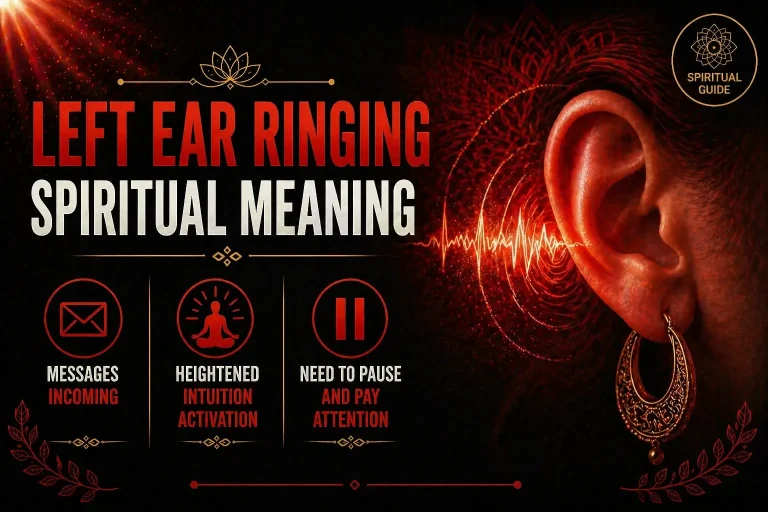
Left eye twitching carries deep spiritual meaning across many cultures, often signaling heightened intuition, emotional shifts, or incoming messages from the universe. Most traditions link the left side of the body to the subconscious, feminine energy, and receptivity. Whether seen as a good omen or a warning, the twitch is widely understood as a call to pay closer attention to what is happening within you and around you.
What Does Left Eye Twitching Mean Spiritually?
The left eye is spiritually tied to your inner world. It connects to intuition, emotion, and the receptive side of your energy. When it twitches, many traditions read it as a signal that your body is picking up on something your conscious mind has not yet noticed.
Think of it as an internal nudge. Your nervous system and your energy field may be responding to unseen influences, emotional suppression, or an incoming shift in your life.
The core spiritual message is simple: slow down, tune inward, and pay attention.
The Left Side of the Body: Why It Matters Spiritually

In most ancient traditions, the left side of the body is considered the receptive, intuitive, and feminine side. It absorbs energy from the environment rather than projecting it outward. This is why left-side signals are often interpreted as incoming messages.
The Ajna chakra, or third eye chakra, sits between the eyebrows and governs spiritual vision and inner knowing. The left eye connects directly to this energy center. A twitch near or around the left eye is sometimes read as a gentle activation of this chakra.
The left side is also linked to the moon, dreams, and the subconscious mind. These associations appear across Hindu, Chinese, African, and Indigenous traditions, all reinforcing the idea that left-side signals carry inward, reflective meaning.
Cultural Interpretations of Left Eye Twitching
Indian Culture and Vedic Astrology

India has one of the oldest and most detailed systems for interpreting eye twitching. The ancient text Samudrika Shastra classifies body signals as divine messages. Left eye twitching is interpreted based on gender.
For women, it is considered highly auspicious. It may signal incoming good news, a financial gain, the arrival of a loved one, or the fulfillment of a long-held wish.
For men in traditional Hindu belief, the same twitch can be read differently. Under Shakun Shastra (omen astrology), left eye twitching for men may signal a period of waiting before receiving what they desire, though some interpretations frame it as an impending reward.
Location within the eye also matters in Vedic tradition:
- Upper eyelid twitch: arrival of an important person or good news
- Lower eyelid twitch: possible emotional release or upcoming expenses
- Corner of the eye: associated with a financial windfall
Tamil astrology specifically treats left eye twitching for women as extremely positive, linking it to prosperity, family celebrations, and joy.
Chinese Culture and the Time-of-Day System

Chinese folklore interprets left eye twitching using a precise time-of-day framework. The meaning shifts depending on when the twitch occurs.
Morning twitches are generally considered auspicious, signaling a good day or welcome news. Afternoon twitches may indicate incoming financial opportunity. Evening or nighttime twitches are sometimes read as a sign of travel, reunion, or reflection.
Chinese medicine also links eye twitching to the flow of Qi, or life force energy. A twitch in the left eye suggests that positive energy is moving through the body, bringing vitality and good fortune.
African Traditional Beliefs
African traditions hold a rich and varied set of interpretations. In many communities, left eye twitching signals that someone is speaking about you behind your back. This is not always negative; it is more of a prompt to be aware of your social surroundings.
The Yoruba people of Nigeria and Ghana call this sensation “eye crying.” It signals either that gossip is circulating about you or that an emotional catharsis is approaching. In both cases, it is treated as an invitation to seek deeper truth.
In some West African beliefs, the upper eyelid twitching predicts an unexpected visitor, while the lower eyelid twitch suggests that tears, whether joyful or sorrowful, are coming.
Caribbean Traditions (Trinidad and Wider Region)
Caribbean communities, particularly in Trinidad, associate left eye twitching with trouble or bad news involving someone close. It could warn of a dispute, unexpected hardship, or an unpleasant piece of information arriving soon.
These beliefs reflect the deeply spiritual and community-centered nature of Caribbean culture, where bodily sensations are taken seriously as omens linked to family and relationships.
Hawaiian Tradition
In Hawaiian belief, left eye twitching can signal the arrival of a stranger or, in some interpretations, foretell a significant change within the family. Unlike some traditions that frame this negatively, Hawaiian culture often treats these signals as important awareness cues rather than curses.
Western Perspectives
Western cultures tend to approach left eye twitching with more skepticism, often attributing it entirely to physical causes. However, older Western folk traditions did associate it with bad luck or misfortune.
Modern spiritual thinkers in the West now blend psychology with spirituality, interpreting the twitch as an “interruption signal.” This means your nervous system is flagging something emotionally or energetically that you have not fully acknowledged yet.
Religious Views on Left Eye Twitching
Islam
Islamic scholarship is clear on this matter. Eye twitching superstitions have no basis in Islamic law (Sharia). Muslim scholars categorize these folk beliefs as superstitions that contradict proper faith in Allah. A believer is instructed to place their trust in Allah alone, not in bodily omens or signs. Cultural superstitions about the left eye bringing bad luck and the right eye bringing good luck circulate in some Muslim-majority communities, but these are not endorsed by Islamic doctrine.
Hinduism
Hinduism offers the most elaborate and codified system for reading eye twitching. As noted above, Samudrika Shastra and Shakun Shastra both recognize body movements as spiritually significant. The left eye holds particular importance for women, and the right eye holds significance for men in most Hindu frameworks. Twitching is seen as a message from cosmic forces or the planets.
Christianity
The Bible does not mention eye twitching as a spiritual sign. Christian doctrine does not support treating involuntary muscle spasms as divine messages. Some modern Christian writers have offered personal interpretations, such as the twitch symbolizing a need for caution or self-examination, but these remain personal views, not established doctrine.
Judaism
Kabbalistic tradition encourages introspection during unusual bodily experiences. The Talmud notes left eye twitching in the context of impending sorrow or anger. Jewish mysticism generally treats such signs as prompts for ethical and spiritual self-examination, not as fixed omens.
Buddhism
Buddhist teaching does not assign fixed spiritual meanings to eye twitching. However, some practitioners interpret physical sensations during meditation, including twitching around the eyes, as signs of energy movement through the chakras or as indicators of spiritual progress.
Hoodoo and African Diasporic Traditions
In Hoodoo, a spiritual practice rooted in African American folk magic, the body is seen as a living spiritual instrument. Left eye twitching can be interpreted as a psychic alert, warning the practitioner to guard their energy, watch for betrayal, or prepare for an emotional encounter. Practitioners may respond with protective rituals, prayer, or energy cleansing.
Wicca
In Wiccan belief, the left side connects to the goddess energy, lunar cycles, and receptive magic. A twitching left eye may be interpreted as a sign from the goddess, a message from spirit guides, or a cue to work with protective spells or moon-based rituals. Wicca generally encourages the practitioner to trust their intuition when reading such signals.
The Third Eye Connection

The Ajna chakra, known as the third eye, is the sixth energy center in yogic philosophy. It sits between the eyebrows and governs intuition, spiritual sight, and inner wisdom. When this chakra begins to activate, many people report physical sensations around the eyes, including twitching, pressure, and pulsing.
Left eye twitching may indicate that this chakra is opening or clearing. If you are in a period of spiritual growth, doing deep inner work, or opening yourself to new awareness, this physical sensation can accompany that shift.
The Ajna is the meeting point of the Ida and Pingala energy channels, which carry feminine and masculine energy respectively. When these two channels converge here, the result is spiritual balance and expanded perception.
Gender Differences in Interpretation
Most traditions that assign gender-based meaning follow this general pattern:
| Tradition | Left Eye Twitch for Women | Left Eye Twitch for Men |
|---|---|---|
| Indian (Vedic) | Good omen, prosperity, good news | Mixed; may signal hardship or delayed blessing |
| Chinese | Good luck, prosperity | Good fortune in many interpretations |
| African (general) | Warning; gossip; incoming emotion | Warning; someone speaking ill of you |
| Caribbean | Bad news involving loved ones | Warning of trouble |
| Hawaiian | Arrival of a stranger or change | Similar to women’s interpretation |
It is important to understand that these are cultural beliefs, not universal facts. The gender distinction reflects historical cultural frameworks, not biological or spiritual truths.
Spiritual Meaning Based on Which Part of the Eye Twitches
Where exactly the twitch occurs within the left eye can refine the interpretation according to various traditions.
Upper left eyelid: Often linked to receiving good news, spiritual awakening, or a message from a higher power. In yogic terms, upper-eyelid activity connects more directly to the third eye and higher consciousness.
Lower left eyelid: Frequently associated with emotional release, upcoming sadness or tears, or a need to process suppressed feelings. Some African traditions read this specifically as a sign that crying is coming.
Inner corner of the left eye: Linked in Vedic tradition to financial news, either an unexpected gain or an upcoming cost.
Outer corner of the left eye: Sometimes associated with social matters, relationships, or news about people in your circle.
Left Eye Twitching and Emotional Energy

Many spiritual psychologists and energy healers link left eye twitching to suppressed emotional energy. When emotions are held back and not processed, they create blockages in the body’s energy field. The twitch can be the body’s attempt to release some of that pressure.
If you have been ignoring your feelings, avoiding difficult conversations, or pushing through emotional pain without acknowledging it, the twitch may be a somatic signal. Your body is flagging what your mind has been avoiding.
This is not folklore. The mind-body connection is well recognized in modern psychology, and the nervous system does respond to emotional and energetic states in measurable ways.
Left Eye Twitching as an Empathy Signal
Highly empathic individuals sometimes experience more frequent left eye twitching. Because empaths absorb the emotional energy of others, their bodies can react physically to shifts in the energy around them.
If you are someone who feels deeply affected by the emotions of people around you, a left eye twitch may be your nervous system registering an energetic input you have not consciously processed yet. It is a prompt to check in with your emotional boundaries.
This angle is largely missed by most discussions of the topic. Empathy is a real neurological trait, and its physical manifestations deserve recognition.
The Science Behind Eye Twitching
Medically, eye twitching is called eyelid myokymia. It is an involuntary spasm of the orbicularis oculi muscle, the muscle that surrounds the eye. According to Johns Hopkins Medicine, common triggers include stress, fatigue, eye strain, caffeine, dehydration, and certain medications.
A 2024 peer-reviewed study published in Cureus found a significant link between prolonged digital screen time, electrolyte imbalances, and eyelid twitching. Magnesium deficiency in particular has been associated with increased muscle spasms throughout the body.
Most cases of eyelid myokymia are benign and resolve on their own. However, if twitching is persistent, spreads to other parts of the face, or is accompanied by vision changes, it warrants a medical evaluation. Serious but rare causes include neurological conditions like hemifacial spasm or blepharospasm.
Understanding the physical cause does not cancel the spiritual meaning. Both perspectives can coexist. The body and the spirit are not separate.
What To Do When Your Left Eye Twitches?

Spiritually
Pause and breathe. The first and most important step is to stop and notice. Take three slow breaths and tune into what you were thinking or feeling right before the twitch began.
Journal your thoughts. Write down what was on your mind at the time. Patterns often emerge over days or weeks that reveal a recurring emotional theme or spiritual message.
Meditate on your intuition. Sit quietly and focus your attention gently between your eyebrows. Ask yourself what you have been avoiding knowing. Listen without judgment.
Cleanse your energy. If you follow a spiritual tradition, this is a good time to use your preferred clearing practice, whether that is prayer, smudging, ritual bathing, or simply spending time in nature.
Trust your gut. The left eye is linked to intuition. If you have been second-guessing a feeling or ignoring a persistent inner knowing, this is your sign to trust it.
Physically
- Reduce caffeine and alcohol intake
- Prioritize quality sleep
- Take regular breaks from screens
- Stay hydrated and consider checking magnesium levels
- Apply a warm compress to relax the eye muscles
- Consult a doctor if twitching lasts more than two weeks or spreads
Key Takeaways
The spiritual meaning of left eye twitching is not one-size-fits-all. Its interpretation depends on your cultural background, gender, spiritual tradition, and the specific circumstances of your life.
Across nearly all traditions, the core message is the same: pay attention. Something within you or around you needs your awareness.
The left side connects to intuition, emotion, and receptivity. A twitch there is an invitation to look inward, trust your inner voice, and address anything you have been suppressing or avoiding.
You do not have to choose between spiritual and physical explanations. Both offer valuable information. If the twitch persists, address it medically. If it is brief and accompanied by a strong intuitive feeling, treat it as the inner signal it may well be.
FAQ’s
What does left eye twitching mean spiritually?
Spiritually, left eye twitching is most commonly interpreted as a sign of heightened intuition, incoming news, an emotional shift, or a message from your subconscious or spiritual guides. The meaning varies by tradition, but the unifying theme is that your body is asking you to pay attention to something you may be overlooking.
Is left eye twitching good or bad?
It depends on your cultural background and tradition. In most Indian and Chinese traditions, left eye twitching for women is considered a good omen. In African and Caribbean traditions, it is more often a warning. Spiritually, it is best understood as neutral: neither purely good nor bad, but a signal worth heeding.
What does left eye twitching mean for females?
For women, left eye twitching is widely considered auspicious across Indian, Chinese, and many African traditions. It is linked to good news, incoming blessings, financial gain, emotional awakening, and heightened intuition. Some traditions also associate it with the arrival of a loved one or a positive life change.
What does left eye twitching mean for males?
For men, interpretations are more mixed. In Indian Vedic tradition, it can signal a delay before receiving a desired outcome. In African and Caribbean traditions, it is often a warning about enemies or gossip. In Chinese tradition, many interpretations for men are also positive, linking it to incoming good fortune.
Does Islam say anything about left eye twitching?
Yes. Islamic scholars clearly state that attaching spiritual meaning to eye twitching is a superstition with no basis in Sharia. Muslims are encouraged to trust in Allah alone and not to take omens from bodily sensations. Cultural superstitions about eye twitching exist in some Muslim communities but are not endorsed by Islamic teachings.
What is the connection between left eye twitching and the third eye?
The left eye is energetically linked to the Ajna chakra, also called the third eye, which governs intuition and inner vision. When the third eye begins to activate during spiritual growth, physical sensations around the eyes, including twitching, can occur. It is interpreted as the chakra opening and your spiritual sight expanding.
Can left eye twitching mean someone is thinking about you?
Yes, this belief exists in several traditions. Many African, Chinese, and folk traditions hold that left eye twitching means someone is talking about you or directing strong thoughts your way. Some energy-based frameworks also support the idea that your body can detect the emotional attention of others before your conscious mind does.
How long should left eye twitching last spiritually?
Spiritually, a brief twitch is typically seen as a passing signal or a quick message. A persistent or recurring twitch is interpreted as a more urgent or unresolved message, suggesting something deeper that needs attention. Physically, twitching that lasts more than two weeks or interferes with daily life should be evaluated by a doctor.
What does it mean if my left eye twitches at night?
In Chinese tradition, nighttime left eye twitching is sometimes linked to travel, reunion with someone from your past, or a shift in your emotional state. Spiritually, it can also be connected to dream energy and subconscious processing, since the left side governs the inner world and nighttime is the realm of the subconscious.
Can left eye twitching be a sign of spiritual awakening?
Yes. In yogic and chakra-based traditions, left eye twitching can accompany a spiritual awakening, particularly if it coincides with increased synchronicities, vivid dreams, sudden intuitive knowing, or a strong desire for inner change. It may signal that your energy system is upgrading and your perception is shifting.
Is left eye twitching related to emotions?
Many spiritual frameworks and modern psychologists agree on this point. Suppressed emotions, unresolved inner conflict, and emotional overload can all manifest as physical sensations, including eye twitching. If you have been holding back feelings or ignoring your emotional state, the twitch may be your body’s way of drawing your attention to what needs to be processed.
What should I do when my left eye twitches?
First, notice what you were thinking or feeling right before it happened. Then use whatever practice resonates with you: journaling, meditation, prayer, or energy cleansing. If you follow a cultural tradition, consult its specific interpretation. Also address any physical triggers like poor sleep, too much caffeine, or excessive screen time.
This article is for informational and cultural purposes only. If you experience persistent eye twitching, please consult a licensed medical professional.