Feeling Chills After Someone Dies: Spiritual Meaning & Reasons
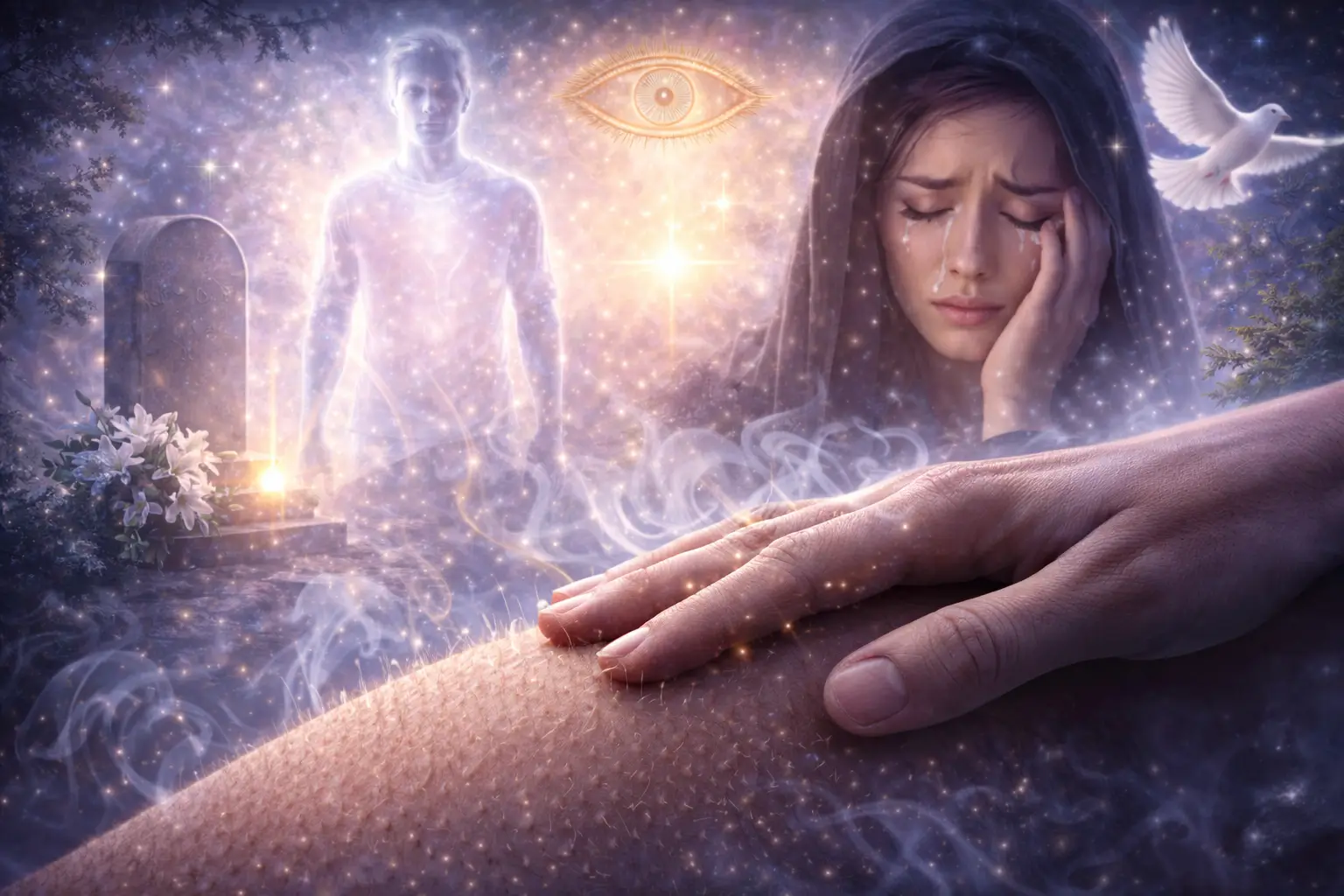
When someone you love dies, you may suddenly feel a wave of chills run through your body. This is one of the most commonly reported experiences after a death, and it can mean different things depending on who you ask. Spiritually, many traditions interpret these chills as a sign that the soul of the deceased is nearby, crossing over, or reaching out. Scientifically, the body responds to intense grief and emotional shock in ways that can produce real physical sensations, including chills and goosebumps.
This article covers every angle of this experience, from ancient spiritual traditions to modern neuroscience research.
What Does It Mean When You Feel Chills After Someone Dies?
The chills you feel after a death are not random. They happen at one of the most emotionally charged moments in a person’s life.
Many spiritual traditions say these chills are direct contact from the spirit world. Others say the body is simply reacting to the weight of grief. Both explanations carry real meaning and are worth exploring.
The truth is, for most people, it feels like both things at once. The physical sensation is real, and the emotional significance behind it is real too.
The Science Behind Feeling Chills During Grief
What Causes the Physical Chill?
Your nervous system is deeply connected to your emotions. When you receive shocking or devastating news, your body enters a state similar to a mild stress response.
This triggers the release of adrenaline, which causes your blood vessels to constrict slightly and your skin to react. The result is a physical sensation of cold or chills, even when the room temperature has not changed.
Goosebumps and the Brain’s Reward System
Scientists have studied the phenomenon of emotional chills, sometimes called “frisson,” for decades. Research published in Neuroscience News found that emotional chills are linked to dopamine activity in the brain’s reward pathways.
This means chills are not just a fear response. They are also connected to powerful emotional processing, including love, loss, and spiritual awe.
The “Kama Muta” Response
Psychologists use the term “kama muta” to describe the state of being deeply moved. According to The Conversation, this state is associated with chills, a warm sensation in the chest, and sometimes tears. It happens when we experience a sudden rush of social connection or love.
Grief is one of the strongest triggers of this state. When someone dies and you feel chills, your nervous system may be marking that moment as emotionally significant.
Emotional Sensitivity and Openness to Experience
Not everyone experiences physical chills during grief. Brain Health University notes that people who are high in a personality trait called “openness to experience” are far more likely to feel chills during emotional moments.
This trait is linked to imagination, curiosity, and emotional depth. If you feel chills easily during music or meaningful events, you are likely wired to have a stronger mind-body connection.
Spiritual Meaning of Chills After Someone Dies
The Soul Is Leaving or Crossing Over
Many spiritual traditions teach that the soul does not immediately leave after the body dies. It may linger nearby for a period before moving on.
Some people feel chills right at the moment of death or shortly after. This is widely interpreted as the soul passing through the physical space around you as it begins its journey.
The Deceased Is Trying to Reach You
One of the most widespread spiritual interpretations is that chills signal the presence of your loved one. Spiritualist traditions hold that spirits operate at a higher vibrational frequency than the living.
When a spirit enters close proximity, it can lower the temperature in the area or create a cold sensation on your skin. This is why chills are often described alongside other signs like flickering lights or a sudden sense of being watched.
You Are Receiving an Energetic Message
Some energy-based spiritual frameworks describe chills as an “energetic download.” This means the spirit or a higher spiritual force is passing information or comfort directly to your energy field.
The chill sensation is the physical signal your body produces when your energy field has been touched by something beyond the physical. Many people report that these chills feel very different from ordinary cold sensations.
A Spiritual Confirmation or Validation
In many intuitive traditions, chills are seen as a “yes” from the spirit world. If you are thinking about your loved one and suddenly feel chills, this may be interpreted as confirmation that they are near.
This type of chill often runs up the spine or across the shoulders. Many people describe it as moving upward through the body, starting at the feet or legs.
What Different Spiritual Traditions Say
Christianity and Catholicism
In Christian belief, the soul continues after physical death. Catholic tradition teaches that the soul may undergo a period of purification before entering heaven.
Many Catholic families report feeling chills during prayers for the deceased. This is often understood as the presence of the Holy Spirit or the soul responding to prayer.
Islam
In Islamic belief, the soul enters a state called Barzakh immediately after death. This is an intermediate realm between death and the Day of Judgment.
Islamic tradition teaches that angels attend the moment of death. Some Muslims interpret physical sensations like chills during mourning as awareness of divine presence rather than direct contact with the deceased soul.
Hinduism
Hindu belief holds that the soul leaves the body and begins its transition. Cremation is performed quickly to help the soul release from the physical world.
For 13 days after death, the soul is believed to be in transition. Cold sensations during this time are sometimes associated with the soul’s presence.
Buddhism
Buddhist tradition teaches that after death, consciousness enters a state called Bardo, lasting up to 49 days.
Feeling chills during this period may be interpreted as awareness of the consciousness in transition.
African Traditional Beliefs
In many African traditions, ancestors remain active in the lives of the living. A sudden cold sensation is often interpreted as the presence of an ancestor.
Hoodoo and Folk Traditions
In Hoodoo, chills after death are seen as signs from the spirit. The direction and intensity of the chill can carry meaning.
Wicca and Pagan Traditions
Wiccan beliefs include the idea that the veil between worlds is thin around death. Chills are seen as a sign of contact between realms.
After-Death Communication: What Research Shows
ADC Is More Common Than You Think
After-death communication (ADC) is widely reported. Research shows that 30 to 34 percent of people experience at least one such event.
ADC Helps People Grieve
Studies show that most people who experience ADC find it comforting and helpful in processing grief.
University Research Findings
Research from the University of Virginia has shown that these experiences often reduce grief and bring emotional relief.
Not Just a Hallucination
Some people report these experiences even without active grief, suggesting they are not purely psychological.
Different Types of Chills You Might Feel
| Type of Chill | Description | Common Interpretation |
|---|---|---|
| Full-body wave | Moves through entire body | Strong presence or confirmation |
| Localized cold | One area feels cold | Targeted contact |
| Spine tingle | Up or down spine | Energetic signal |
| Skin prickle | Goosebumps | Emotional or spiritual response |
| Room chill | Entire space feels cold | Environmental presence |
When Do These Chills Typically Happen?
At the Moment of Death
Many people report chills at the exact moment someone passes away.
Days After Death
Chills are common in the days following death, when grief is strongest.
While Thinking of the Person
Chills often occur when remembering or thinking deeply about the deceased.
On Anniversaries
Birthdays and death anniversaries commonly trigger these sensations.
What To Do When You Feel Chills After Someone Dies
Acknowledge It
Do not ignore the experience. It is meaningful whether physical or spiritual.
Stay Present
Notice where and how you feel the sensation.
Speak to Them
Many find comfort in talking to the deceased.
Journal It
Writing helps identify patterns and process emotions.
Seek Support
If distressing, speak to a grief counselor.
Use Ritual
Simple acts like lighting a candle can bring meaning.
Why Some People Feel Chills and Others Do Not
Not everyone experiences chills. This does not reflect love or connection.
People process grief differently. Some feel physically, others emotionally.
From a spiritual view, communication may come in different forms like dreams or signs.
Key Takeaways
- Chills after death have both scientific and spiritual explanations
- A large percentage of people report after-death experiences
- These experiences are often comforting, not harmful
- Different cultures interpret them differently
- The meaning depends on personal belief and context
- Responding with awareness and reflection is more important than explanation
Frequently Asked Questions
Is it normal to feel chills when someone dies?
Yes, it is common and widely reported across cultures.
Can chills happen at the exact moment of death?
Yes, many people report this experience.
How long can you feel their presence?
It varies from days to years depending on personal experience.
Are chills a sign the soul is at peace?
Often interpreted that way, especially if the feeling is calm.
What if chills happen while thinking of them?
Many see it as a sign of connection or presence.
Should I be afraid?
No, especially if the feeling is calm or comforting.
Does it mean they haven’t moved on?
Not necessarily. Many beliefs allow continued connection.
Why only sometimes?
Both spiritual and psychological factors vary over time.
Are chills the same as panic attacks?
No, panic attacks involve intense fear and multiple symptoms.
Could it be medical?
If symptoms persist or feel unusual, consult a doctor.
Do cultures interpret this differently?
Yes, interpretation varies, but the experience itself is universal.
Is there scientific research?
Yes, research confirms these experiences are common and meaningful.
Sources and Further Reading
- Bial Foundation: The Impact of After-Death Communication in Bereavement
- Neuroscience News: Aesthetic Chills and Emotional State
- Religion Media Centre: Death and Funerals in World Religions
- The Conversation: Goosebumps, Tears and Tenderness
- University of Virginia DOPS: After-Death Communication Research
- Windbridge Research Center: Grief and After-Death Communication