Tortoiseshell Cats Spiritual Meanings – A Complete Guide
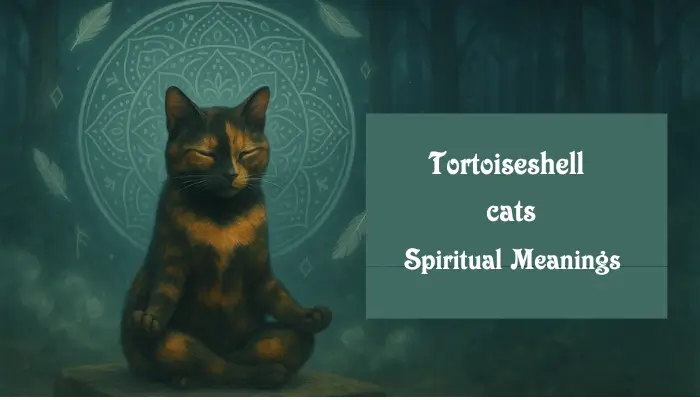
Tortoiseshell cats carry deep spiritual meaning across dozens of cultures worldwide. They symbolize good luck, feminine power, protection, balance, and transformation. Nearly every major world tradition — from Japanese folklore to Celtic healing rites — treats these cats as something beyond ordinary. If a tortie has entered your life, many believe it is not by accident.
What Makes a Tortoiseshell Cat Unique
Tortoiseshell cats are not a breed. They are defined entirely by their coat, a mosaic of black, orange, and sometimes cream woven together in a pattern that never repeats twice. No two torties look the same, which is part of what has made them feel mystical for centuries.
Their rarity adds to their spiritual weight. According to Wikipedia’s article on cat coat genetics, approximately one in every 3,000 tortoiseshell cats is male. The pattern requires two X chromosomes, so nearly all torties are female by biology itself.
This is not just trivia. It is the scientific foundation behind centuries of spiritual belief. Almost every culture that honored the divine feminine found something sacred in a cat that is, almost always, female by nature.
The Science Behind the Colors
The tortoiseshell pattern is caused by a process called X-inactivation. In female cats with two X chromosomes, one X switches off randomly in each cell during early embryo development. Cells where the orange gene is active grow orange fur. Cells where it is inactive grow black fur.
The result is a living mosaic, a coat literally built from biological randomness. Scientists describe this as one of the clearest visible examples of X-inactivation in all of mammalian biology. The pattern is not painted — it grows cell by cell, unique every time.
This means every tortoiseshell cat is a one-of-a-kind creation at the genetic level. Ancient cultures sensed this uniqueness long before science could explain it.
The Spiritual Core: What Tortoiseshell Cats Symbolize
Good Luck and Fortune
The most universal spiritual belief about torties is that they bring good luck. This belief appears in the United Kingdom, Ireland, Japan, the United States, and across Southeast Asia. It is not limited to one tradition or one era.
In many cultures, spotting a tortoiseshell cat before a journey or a major life event was considered a very positive omen. Luck was not passive — the cat was seen as actively drawing good fortune toward the household.
Feminine Energy and Goddess Power
Because nearly all torties are biologically female, spiritual traditions connected them directly to feminine energy. They became symbols of intuition, creativity, inner strength, and the cycles of nature.
In Wiccan and pagan traditions, the tortoiseshell cat is often seen as a companion to the goddess archetype. Its coat, blending darkness and warmth, reflects the dual nature of feminine power — both nurturing and fierce, both mysterious and radiant.
Protection Against Negative Energy
Tortoiseshell cats have long been seen as protectors. Many traditions believe they can sense and deflect negative energy before it reaches their owners. Their presence was thought to act as a shield, keeping harmful forces away from the home.
This is more than superstition in some traditions. Certain Celtic practices held that a tortie’s presence actively purified a space. The cat was not a passive symbol — it was a guardian in action.
Balance Between Opposites
The tortoiseshell coat visually blends two opposing colors into one harmonious whole. This made torties natural symbols of balance — the unity of dark and light, fire and earth, masculine and feminine.
Many spiritual teachers use the tortie as a living example of yin and yang. Opposites do not have to conflict. They can exist together, intertwined, creating something more beautiful than either alone.
Transformation and Change
The patchwork coat also came to represent transition. Just as the colors shift and blend across the fur, life itself is always shifting. Torties became spiritual guides through periods of change, appearing when someone needed encouragement to move forward.
Some believe that when a tortoiseshell cat enters your life unexpectedly, it signals that a major transformation is coming. The cat does not bring the change. It helps you navigate it.
Tortoiseshell Cats in World Cultures and Traditions
Japan: Lucky Cats and Sea Guardians
Japanese culture has one of the richest traditions around tortoiseshell cats. They were considered powerful protectors, and ship captains in the Edo period famously kept torties on board to ensure safe voyages. The cat was seen as a guardian of travelers on sea journeys.
According to documented Edo-period Japanese folklore at Yokai.com, the courtesan Usugumo of the Yoshiwara district always carried her beloved tortoiseshell cat with her. When a suspicious owner killed the cat, the severed head reportedly bit a snake that had been hiding above her, protecting her from harm. The cat’s loyalty became legend.
This story is considered one of the cultural roots of the maneki-neko tradition, the “beckoning cat” figurines now found in businesses worldwide. As National Geographic documents, the maneki-neko dates to at least the 17th century Edo period, with several origin legends tied to cats saving human lives.
Male tortoiseshell cats are considered especially lucky in Japan precisely because of their extreme rarity. A male tortie was seen as a supernatural gift, almost impossible by nature.
Celtic and Irish Traditions
Celtic traditions gave tortoiseshell cats a role as healers. An old Irish folk belief holds that rubbing a wart with the tail of a tortoiseshell cat under a full moon would cure it. This practice tied the cat to lunar energy and the healing properties of the feminine.
Celtic lore also cast torties as protective house spirits. A tortoiseshell cat living in your home was believed to guard the family from curses and misfortune, much like a spiritual sentinel posted at the door.
Another Irish legend tells of a tortoiseshell cat that protected a family’s home from fire for multiple generations. The cat was not seen as lucky in a passive sense — it was actively standing guard over the family’s safety.
Ancient Egypt
Ancient Egypt revered all cats, and tortoiseshell cats were no exception. The goddess Bastet, protector of home and family, was often depicted as a cat or cat-headed woman. Cats in Egypt were associated with divine protection and were treated with deep reverence.
The unique patterns of tortoiseshell cats likely held additional significance in a culture that saw meaning in every natural variation. Killing a cat, even accidentally, was reportedly punishable by death in ancient Egypt. These animals were sacred.
The Spanish/Latin Sun Legend
One beautiful legend — recorded in Spanish folk tradition — tells that centuries ago, the Sun asked the Moon to cover for him so he could walk the Earth freely. He took the form of a black cat to go unnoticed. When the Moon left without warning, the Sun scrambled back to the sky, leaving thousands of golden rays embedded in the cat’s fur.
Tortoiseshell cats, by this legend, are descendants of that black cat who once hosted the Sun. The orange and gold patches in their coats are the Sun’s rays left behind. The split-face pattern seen in some torties is said to be evidence of their dual nature — half cat, half heavenly star.
Maritime Folklore
Sailors across Europe and Asia kept tortoiseshell cats on ships. The belief was consistent: a tortie onboard brought fair weather, protection from storms, and safety during long voyages. Losing the ship’s cat was considered a terrible omen.
This belief crossed cultural boundaries, appearing in British, Irish, Japanese, and Southeast Asian maritime traditions independently. Whatever the origin, sailors trusted these cats with their lives.
Tortoiseshell Cats as Spirit Animals and Totems
What It Means If a Tortie Is Your Spirit Animal
If the tortoiseshell cat appears as your spirit animal, it often reflects a deep alignment with intuition and inner wisdom. People drawn to the tortie totem tend to be emotionally perceptive, creative, and fiercely independent in their thinking.
The tortie spirit animal also signals that you may be at a crossroads. Its energy encourages you to trust yourself, blend the different sides of your personality, and move forward without waiting for everything to be perfectly clear.
What It Means When a Tortie Chooses You
Many spiritual traditions hold that cats choose their humans, not the other way around. If a tortoiseshell cat has adopted you, shown up repeatedly, or bonded unusually closely, this is considered significant.
It may mean you carry a natural protective or healing energy. It may also mean the cat is fulfilling a role — sensing your emotions, grounding your energy, or simply keeping vigil over your home and wellbeing.
Tortoiseshell Cat Colors and Their Spiritual Meanings
The specific color combinations in a tortie’s coat carry their own symbolism. Here is a simple reference:
| Color Present | Spiritual Association |
|---|---|
| Black | Mystery, protection, psychic awareness |
| Orange / Red | Creativity, vitality, fire energy, transformation |
| Cream / Gold | Purity, solar energy, wisdom, clarity |
| Brown / Chocolate | Grounding, earthly stability, warmth |
| Blue / Grey (dilute) | Calm, intuition, spiritual sensitivity |
Dilute tortoiseshells — those with softer grey and cream tones instead of deep black and orange — are often associated with gentler, more subtle spiritual energy. They are sometimes called “blue torties” and carry a quieter but equally powerful presence.
Tortoiseshell Cats in Dreams
Seeing a tortoiseshell cat in a dream is widely interpreted as a positive sign. Most traditions agree it signals protection, an upcoming positive change, or a message from your intuition worth paying attention to.
If the cat in your dream is calm and approaches you, it is generally read as a sign of safety and incoming good fortune. If the cat is alert or watchful, it may be prompting you to pay closer attention to something in your waking life.
A dreaming tortie that speaks or acts unusually is sometimes interpreted as a message from beyond — a signal that a loved one in the spirit world is checking in on you.
“Tortitude”: The Spiritual Personality
Tortoiseshell cats are famous for their bold, assertive personalities — a trait so consistent it has its own name: “Tortitude.” They are vocal, independent, opinionated, and deeply loyal on their own terms.
A UC Davis study of more than 1,200 cat owners found that owners of torties and calicos consistently rated their cats higher for assertive behaviors compared to cats with solid-colored coats. The personality is documented, not just legendary.
Spiritually, this is interpreted as evidence of strong energy. A tortie is not a passive creature. It does not simply exist in your space — it engages with it, reads it, and responds actively. This is why so many spiritual traditions see the tortie not as a symbol but as a participant.
What To Do: Practical Spiritual Guidance
If a Tortoiseshell Cat Has Entered Your Life
Take note of when and how it appeared. Sudden appearances — especially during difficult life periods — are considered spiritually significant. The timing matters as much as the presence.
Do not force a connection. Tortie energy respects boundaries. Sit near the cat, move slowly, and allow trust to build. The bond, when it forms naturally, is considered especially meaningful.
If You Already Live With a Tortie
Pay attention to where the cat chooses to rest. Many believe cats settle in the energetic center of a home, or in spots that need protection or healing. Notice patterns over days and weeks.
Let your tortie’s presence anchor your meditation or quiet time. Their calm watchfulness can help you slow down and tune into your own intuition more easily.
Simple Practices to Honor Tortie Energy
- Keep your tortie’s space clean and calm — this supports their protective function.
- Place a small crystal like amethyst or moonstone near their favorite resting spot.
- On full moon nights, some practitioners believe the tortie’s intuitive energy is strongest. Spend quiet time together.
- If you do not have a tortie, a small ceramic or painted image of one can serve as a talisman for protection and good luck in your home or workspace.
Key Takeaways
Tortoiseshell cats are spiritually significant across nearly every major world culture. Their symbolism is consistent: good luck, feminine power, protection, balance, and transformation.
Their near-universal female biology is not coincidental in spiritual traditions — it is the foundation of their connection to the divine feminine, the moon, and intuitive energy.
The tortoiseshell cat is not just a beautiful animal. It is a living symbol of opposites in harmony, chaos becoming beauty, and the rare made visible. Whether you hold spiritual beliefs or not, there is something undeniably special about an animal whose very coat is a scientific marvel and a mythological mystery at the same time.
Frequently Asked Questions
What does it mean when a tortoiseshell cat comes to your house?
Many spiritual traditions consider this a very positive sign. A tortie arriving at your door, especially unexpectedly, is often interpreted as incoming good luck, protection, or a spiritual signal that something positive is about to shift in your life.
Is a tortoiseshell cat rare?
The tortoiseshell coat pattern itself is not extremely rare among domestic cats. However, male tortoiseshell cats are exceptionally rare, occurring in approximately 1 in every 3,000 torties. Their rarity is why male torties are considered especially lucky in Japanese and other traditions.
Do tortoiseshell cats have healing energy?
Celtic traditions specifically associated torties with healing. Irish folk belief used the cat’s tail in wart-removal rituals performed under the full moon. Modern spiritual practitioners often describe their presence as emotionally calming and energetically grounding.
What is the meaning of a tortoiseshell cat in Japanese culture?
In Japanese culture, tortoiseshell cats are considered powerful good luck charms. They were kept on ships by Edo-period captains for protection at sea. The maneki-neko (beckoning cat) tradition has roots tied to a tortoiseshell cat saving her owner from harm, as recorded in Yoshiwara legends.
What does it mean spiritually if a tortoiseshell cat stares at you?
Many believe cats can perceive energies invisible to humans. A tortie staring intently at you may be reading your emotional state, sensing a spiritual presence nearby, or simply assessing whether to offer you comfort. In folk traditions across Asia, a cat staring at an empty space is said to indicate a spiritual presence there.
Are tortoiseshell cats connected to any goddess?
Yes, in Wiccan and pagan traditions, tortoiseshell cats are often linked to goddess archetypes. Their nearly all-female biology, their dual-colored coat representing the balance of opposites, and their association with the moon make them natural companions to goddess energy, particularly in traditions honoring lunar deities.
What does a dilute tortoiseshell cat mean spiritually?
Dilute torties — those with soft grey and cream coats instead of deep black and orange — are often associated with gentler spiritual energy. They carry the same protective and intuitive qualities as standard torties but are seen as more subtle in their influence, connected particularly to calm, emotional healing, and spiritual sensitivity.
Can a tortoiseshell cat be a spirit animal if I do not own one?
Yes. A spirit animal does not require physical ownership. If you feel a strong, recurring connection to tortoiseshell cats — through dreams, repeated sightings, or a deep sense of resonance — this is considered enough to establish a spirit animal connection. The energy is relational, not transactional.
What crystals pair well with tortoiseshell cat energy?
Spiritual practitioners commonly suggest amethyst for intuition and calm, moonstone for feminine energy and lunar connection, and black tourmaline for mirroring the tortie’s protective function. These are placed near the cat’s space or used during meditation in the cat’s presence.
Is it bad luck if a tortoiseshell cat leaves your home?
Most traditions do not frame it this way. If a tortie leaves, it is usually interpreted as a signal that its work in that space is complete, or that a change is naturally unfolding. It is generally not considered a negative omen, though it may prompt reflection on what the cat’s presence represented during its time with you.
What does tortoiseshell cat energy mean for someone going through a major life change?
Torties are specifically associated with transition and transformation. Their spiritual role during life changes is that of a guide — not to stop the change, but to help you move through it with strength and adaptability. Many people report feeling unusually calm and grounded during difficult transitions when a tortie is present.
Sources consulted: Wikipedia — Tortoiseshell Cat | Wikipedia — Maneki-neko | Wikipedia — Cat Coat Genetics | National Geographic — The History of the Lucky Cat | Yokai.com — Maneki Neko | ScienceInsights — Tortoiseshell Cat Genetics