What is the Spiritual Meaning of Brimstone Butterfly?
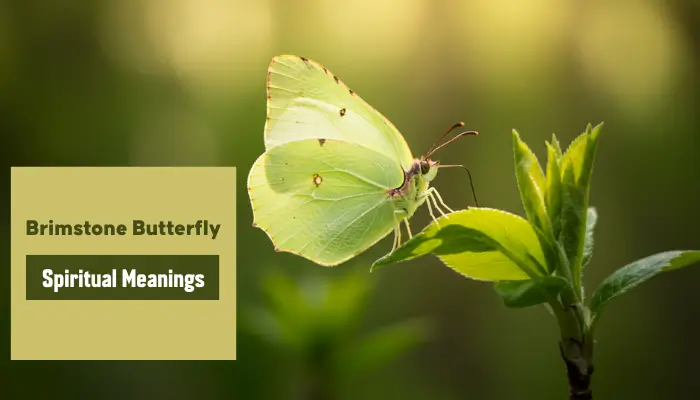
The spiritual meaning of Brimstone butterfly centers on transformation, renewal, and the soul’s journey. It is widely seen as a sign that powerful change is near. Across cultures, this vivid yellow butterfly is interpreted as a messenger of hope, a symbol of rebirth, and even a carrier of departed souls.
What Is the Brimstone Butterfly?
The Brimstone butterfly, scientifically named Gonepteryx rhamni, is one of Europe’s most recognizable butterflies. Its bright, sulfur-yellow wings make it unmistakable in spring woodlands.
It is found across Europe, parts of Asia, and North Africa. Males have bold lemon-yellow wings, while females are a pale greenish-white. Both sexes carry a small orange spot on each wing.
This butterfly has one of the longest lifespans of any butterfly species, living up to 10 to 12 months. It hibernates as an adult and is often the very first butterfly seen each spring, earning it the title of “harbinger of spring.”
The Origin of the Word “Butterfly”
Here is an angle most articles miss entirely.
The Brimstone butterfly may be the reason we call all butterflies “butterflies.” Early naturalists referred to it as the “butter-coloured fly” because of its deep yellow wings resembling fresh butter.
According to Wikipedia’s entry on butterflies, the word derives from the Old English butorflēoge, and one widely accepted theory points directly to the bright yellow male Brimstone as the original inspiration. Over time, the word expanded to cover all species.
This history makes the Brimstone butterfly spiritually unique. It did not just receive a name. It gave a name to an entire category of creatures associated with transformation and the soul.
Core Spiritual Meanings of the Brimstone Butterfly
Transformation and Personal Growth
The Brimstone butterfly’s life cycle mirrors the spiritual concept of rebirth. It begins as a caterpillar, transforms inside a chrysalis, and emerges as a winged creature capable of flight.
This process is called metamorphosis and has been used across spiritual traditions to explain the evolution of the human soul. Seeing the Brimstone is often interpreted as a sign that the observer is entering a significant period of personal change.
A Harbinger of Spring and New Beginnings
The Brimstone is typically the first butterfly seen each year, sometimes emerging as early as February. In many traditions, firsts carry deep meaning. Being the first signal of spring gives this butterfly a strong connection to new starts, hope after difficulty, and the return of light after dark seasons.
Its appearance signals that something dormant is now ready to come alive again. Spiritually, this applies as much to people as it does to the season.
Symbol of the Soul
Across ancient civilizations, butterflies were seen as physical forms of the human soul. The Brimstone, being arguably the original butterfly in cultural memory, carries this symbolism at its deepest level.
In Greek, the word for butterfly is psyche, which also means soul. This is not a coincidence. The Greeks saw the butterfly’s flight as the movement of the liberated spirit, free from the body.
Hope During Difficult Times
The word “brimstone” itself comes from Old English and means “burnt stone,” the ancient word for sulphur. The phrase “fire and brimstone” carries heavy religious weight, yet the butterfly bearing this name is gentle, luminous, and life-affirming.
This contrast is spiritually meaningful. Light emerging from a name associated with fire and divine judgment suggests that even from the hardest circumstances, beauty and hope can arise.
Brimstone Butterfly in Different Cultural and Spiritual Traditions
Irish and Celtic Traditions
In Irish folklore, butterflies were widely regarded as the souls of the dead. According to traditional belief recorded across Irish cultural sources, butterflies were thought to return to visit loved ones and their favourite places.
Up until the 1600s, it was against common law in Ireland to kill a white butterfly, as it was believed to carry the soul of a dead child. Yellow butterflies in Irish lore were associated with success, good fortune, and positive outcomes.
The Irish myth of Étaín is one of the oldest butterfly soul stories. In it, a woman is transformed into a flying creature and eventually reborn. The theme of the butterfly as a soul crossing between worlds is deeply embedded in Celtic storytelling.
Greek Mythology
In ancient Greece, the word psyche referred to both the butterfly and the soul. The goddess Psyche was often depicted with butterfly wings, symbolizing the immortal soul’s journey.
The Brimstone’s emergence from its chrysalis was seen as a powerful metaphor for the soul breaking free from the body. Greek thought treated this transformation not as death, but as an elevation to a higher form of existence.
Native American Traditions
Many Native American tribes viewed butterflies as messengers between the human world and the spirit world. According to traditional belief, butterflies carried prayers and wishes to the Great Spirit.
Yellow butterflies in particular were seen as symbols of joy, dreams, and positive transformation. The Brimstone’s bright color aligns directly with this tradition of yellow as sacred and uplifting.
African Spiritual Traditions
In various African communities, the Brimstone butterfly is seen as a messenger of hope. Its yellow color is associated with the sun, vitality, and the cycle of life, death, and rebirth.
For many African spiritual traditions, the appearance of this butterfly during times of grief or difficulty is interpreted as a comforting sign. It is a reminder that renewal is always possible.
Japanese and East Asian Traditions
In Japanese folklore, yellow butterflies are associated with departed souls returning to visit the living. They are considered gentle emissaries from the spirit world.
A butterfly appearing in or near the home is seen as a loved one’s spirit offering reassurance. This belief gives the Brimstone, when spotted, a deeply personal and emotional spiritual weight.
Christianity
In Christian symbolism, the butterfly’s three stages, caterpillar, chrysalis, and winged adult, represent birth, death, and resurrection. This maps directly onto core Christian theology.
The butterfly was used in early Christian art as a representation of the soul’s journey from earthly life to heavenly existence. The Brimstone’s radiant yellow color was associated with divine light and the glory of God.
Wicca and Earth-Based Spirituality
In Wiccan and neo-pagan traditions, the butterfly, including the Brimstone, is strongly tied to the element of air and to the goddess in her transformative aspect. It is associated with Beltane, the spring festival celebrating life, fertility, and the return of warmth.
Wiccans often regard the butterfly as a sign from the divine feminine that change is not only coming but welcomed. The Brimstone’s early spring emergence makes it particularly sacred in this context.
The Spiritual Meaning of the Brimstone’s Yellow Color
Yellow is not just a color. It carries its own spiritual language.
In spiritual traditions worldwide, yellow is linked to solar energy, intellect, joy, and spiritual clarity. It is the color of the third solar plexus chakra, associated with personal power and confidence.
When a Brimstone butterfly appears, its intense yellow hue is seen as an energetic boost. It signals that it is time to step into personal power, trust one’s inner wisdom, and move forward with confidence.
Yellow also represents caution in some traditions, asking the observer to slow down and reflect before acting. The Brimstone thus carries a dual message: courage and discernment together.
Brimstone Butterfly as a Spirit Animal
What It Means to Have the Brimstone as Your Spirit Animal
The Brimstone butterfly as a spirit animal represents people who carry an inner resilience that others do not see. Like the butterfly that survives an entire winter in hibernation and then emerges vibrant and purposeful, those guided by this spirit animal endure and then flourish.
People aligned with this spirit animal tend to be catalysts for change. They do not just experience transformation themselves. They inspire it in others around them.
Lessons the Brimstone Spirit Animal Teaches
The Brimstone teaches patience. Its long lifespan, its months of hibernation, and its purposeful spring flight all reflect the value of waiting for the right moment.
It also teaches adaptability. This butterfly thrives in woodlands, hedgerows, and even urban gardens. Spiritually, this reflects the ability to find beauty and purpose in many different environments and life situations.
Brimstone Butterfly as a Totem Animal
A totem animal is a symbolic guide connected to a person, family, or community. The Brimstone butterfly as a totem represents communities or individuals going through collective transformation.
When this butterfly appears as a totem symbol, it is often during periods of shared change such as a community rebuilding, a family healing, or a group beginning something new together. Its presence affirms that the process, however difficult, leads somewhere meaningful.
What Does It Mean When a Brimstone Butterfly Visits You?
The circumstances of an encounter with a Brimstone butterfly matter spiritually.
If it lands on you:
Many traditions interpret this as a deeply personal message. It may suggest that a period of personal transformation is imminent, or that a departed loved one is offering comfort.
If it appears at a difficult time:
Its appearance is interpreted as encouragement. It signals that you are being supported through the change you are experiencing.
If it flies across your path:
This is often read as a prompt to reflect on which old patterns or beliefs are ready to be released, as the caterpillar must dissolve entirely before the butterfly can form.
If it appears repeatedly:
Recurring appearances are considered a stronger spiritual signal, one that asks for conscious attention to the message of transformation and renewal.
The Brimstone Butterfly in Dreams
Dreaming of a Brimstone butterfly is generally considered a positive sign. It often reflects a subconscious awareness that change is approaching or is already underway.
In dream interpretation, a yellow butterfly flying freely suggests emotional freedom and coming joy. A butterfly that cannot fly or is trapped suggests feeling limited in waking life, and may be an invitation to identify what is holding you back.
A Brimstone butterfly landing on your hand in a dream is often interpreted as a message from your higher self or spiritual guides, affirming that you are on the right path.
The Hidden Meaning in the Brimstone’s Name
The name “brimstone” is rarely examined for spiritual depth, yet it contains a powerful paradox.
Brimstone is the ancient word for sulphur, a substance long associated with purification, divine wrath, and the underworld in many traditions. In the Bible, fire and brimstone represent judgment and consequence.
Yet the Brimstone butterfly, carrying this same name, is a creature of light, early spring, and renewal. This contradiction holds a profound spiritual message. Transformation often begins in the fire. The most profound changes come through difficulty, not despite it.
The butterfly’s name reflects this truth directly. It is born from the symbolic fires of change and emerges as something luminous.
What To Do When You See a Brimstone Butterfly?
This section is practical, not just symbolic.
Pause and observe:
The Brimstone rarely stays still for long. Its quick, purposeful flight mirrors the fleeting nature of spiritual messages. Take a moment to be fully present when you see one.
Reflect on what is changing:
Ask yourself honestly: what in your life is currently in transition? The Brimstone’s appearance may be affirming that this change is aligned with your growth.
Release what no longer serves you:
The caterpillar must fully dissolve inside the chrysalis. Nothing of the old form survives intact. This is a spiritual invitation to let go of outdated beliefs, relationships, or habits.
Journal your encounter:
If the sighting feels significant, write it down. Note the date, your emotional state, and what was on your mind. Patterns often reveal themselves over time.
Express gratitude:
Across traditions, acknowledging a spiritual sign with gratitude is considered the most respectful and receptive response. A simple, quiet moment of thanks is enough.
Key Takeaways
- The Brimstone butterfly (Gonepteryx rhamni) is one of the most spiritually rich butterflies in European tradition.
- Its core spiritual meaning is transformation, renewal, and the soul’s journey.
- It is one of the possible origins of the word “butterfly,” giving it a unique place in natural and cultural history.
- In Irish, Celtic, Greek, Native American, African, Japanese, and Christian traditions, it carries powerful symbolism.
- Its yellow color connects it to solar energy, personal power, joy, and spiritual clarity.
- Its name, “brimstone,” carries a paradox: a creature of light born from a name associated with fire and purification.
- Seeing one is an invitation to reflect, release, and trust the process of change already underway.
Frequently Asked Questions
Is the Brimstone butterfly the original butterfly?
There is a well-supported theory that it is. Early naturalists called it the “butter-coloured fly” because of its bright yellow wings. According to Wikipedia’s butterfly etymology, this is one of the leading explanations for the origin of the word “butterfly.” The Brimstone’s color and its status as the first butterfly of spring made it the most visible and memorable species to early European observers.
What does it mean when a Brimstone butterfly crosses your path?
A Brimstone butterfly crossing your path is widely interpreted as a sign of incoming change or a reminder to embrace transformation already underway. In Irish folklore, a yellow butterfly crossing your path signals success and good fortune. In broader spiritual tradition, it is a prompt to pay attention to what in your life is shifting.
Does the Brimstone butterfly have a meaning in the Bible?
The Brimstone butterfly is not mentioned directly in the Bible. However, the word “brimstone” appears extensively in biblical texts in connection with divine judgment and purification. The butterfly bearing this name carries a powerful irony: it represents life, hope, and beauty. Some Christian interpreters see it as a symbol of grace emerging from judgment, paralleling the resurrection theme central to Christian faith.
What does the word “brimstone” mean spiritually?
Brimstone is the old English word for sulphur. In spiritual and religious contexts, it has long been associated with purification and divine wrath. In hoodoo and folk traditions, sulphur was used to banish negative energies and cleanse spaces. The Brimstone butterfly shares this name but inverts its energy, representing purification through beauty and transformation rather than through fire.
Can the Brimstone butterfly be a sign from a deceased loved one?
In many traditions, yes. Irish folklore holds that butterflies are the souls of the dead returning to visit loved ones. Japanese tradition views yellow butterflies as departed souls offering comfort. If a Brimstone butterfly appears unexpectedly during a time of grief or at a meaningful moment, many spiritual traditions interpret this as a sign of connection from beyond.
What is the Brimstone butterfly’s meaning in Wicca?
In Wiccan and earth-based spiritual practice, the Brimstone butterfly is connected to the element of air, transformation, and the goddess in her spring aspect. Its early appearance in the year links it to Beltane celebrations and the energy of new growth. It is seen as a sign of divine feminine blessing and a confirmation that the natural cycles of death and rebirth are functioning as they should.
How long does the Brimstone butterfly live, and does this have spiritual significance?
The Brimstone butterfly lives up to 10 to 12 months, making it one of the longest-lived butterflies. Spiritually, this longevity reinforces its symbolism of endurance and patience. It spends months in quiet hibernation before emerging renewed. This is seen as a model for spiritual practice itself: periods of rest and inward focus precede the most vibrant expressions of growth.
Does the Brimstone butterfly have different meanings for men and women?
Some shamanic and indigenous traditions do differentiate by gender, though these interpretations are not universal. The male Brimstone is bold yellow and highly visible. The female is pale greenish-white and far more subtle. Spiritually, some traditions associate the male’s energy with active, outward transformation, and the female’s energy with quiet, inward transformation. Both are seen as equally valid spiritual paths.
What should I do if a Brimstone butterfly lands on me?
Most spiritual traditions view this as a rare and significant event. It is generally seen as a direct message from the spiritual realm, whether from spirit guides, ancestors, or the universe itself. The recommended response across traditions is to remain still, be fully present in the moment, and later reflect on what message the encounter may be carrying for your current life circumstances.
Why does the Brimstone butterfly emerge so early in spring?
Biologically, the Brimstone overwinters as an adult, meaning it does not need time to develop from a pupa in spring. It simply wakes from hibernation. This gives it an enormous head start over other butterfly species. Spiritually, this is interpreted as a sign of preparedness and inner readiness. The Brimstone does not rush its transformation. It completes it quietly in winter so that it can be first to greet the spring.
Is there a difference between seeing a male and female Brimstone butterfly spiritually?
Yes, according to some interpretive traditions. The vivid yellow male is associated with extroversion, action, and visible change. Its bold color draws attention and signals that something outward in your life is ready to shift.
The pale, greenish female is far more camouflaged and harder to spot. Seeing her is sometimes interpreted as a call to look inward, to examine what transformations are happening quietly beneath the surface of your visible life.
This article draws on cultural traditions, folklore, and spiritual interpretive frameworks from multiple regions and belief systems. It is intended as an educational and reflective guide, not as a replacement for professional spiritual counsel or guidance within a specific faith tradition.